Community Composting for City of Pittsburgh's Sustainability & Resilience Division [Figma] [Final Report]
My capstone project as an HCI major at Carnegie Mellon.
Throughout the project, I worked on research of problem space and stakeholders, interviewing experts, interviewing potential users, storyboarding, design of Figma prototypes, and design of presentation/reports.
As the Design Lead, I had more responsibilities focused on the design side of things, including the visual design of our website, and the design language of our presentation and report. I was the main designer of our prototype in Figma.
Being a small team, we overlapped in responsibilities and worked flexibly to cover all areas of our developing product. I had wonderful team members and enjoyed the process of ideating and developing our design with them.
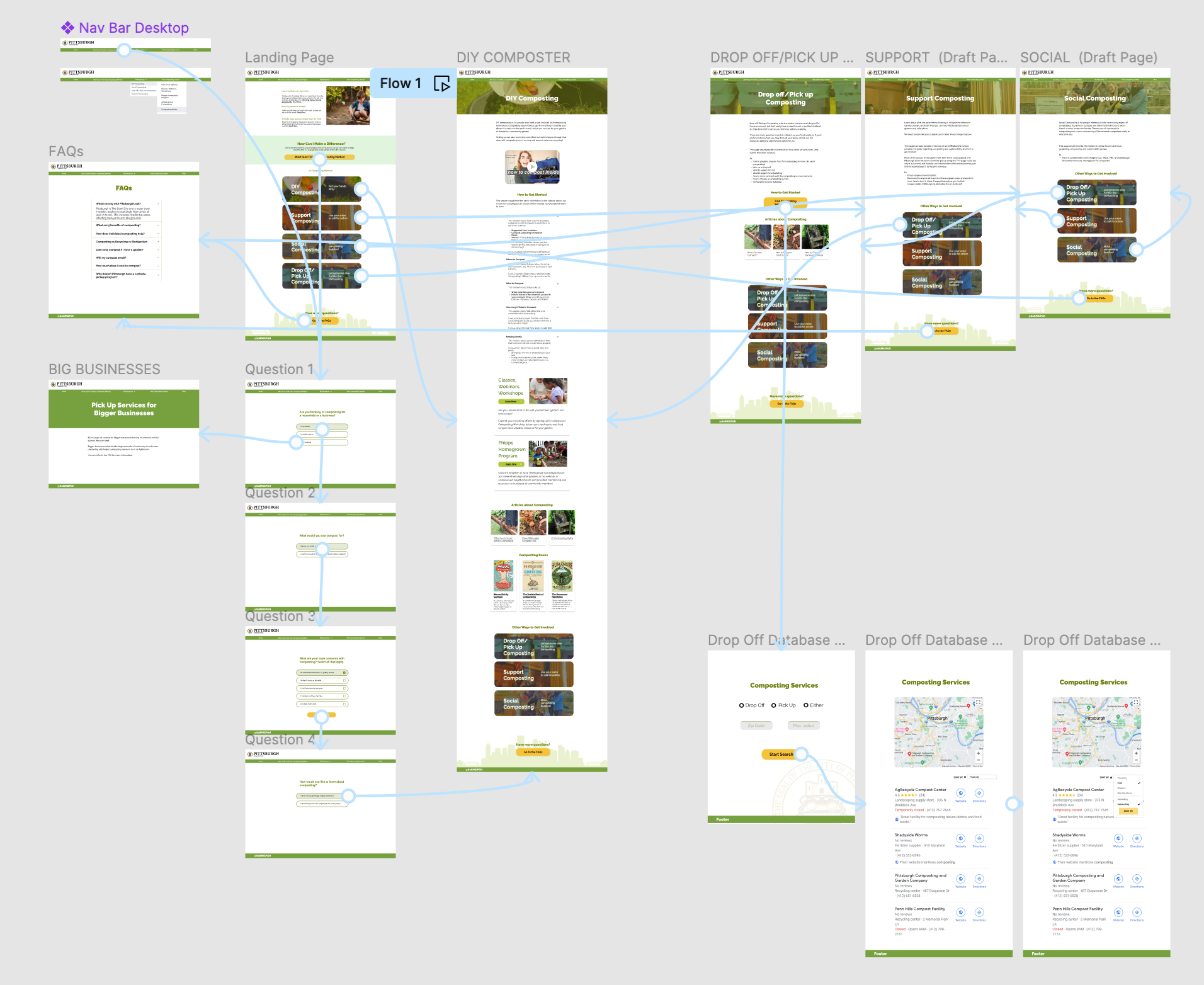
CLIENT AND OVERVIEW
In our team of four, we worked with the Sustainability and Resilience division of the city of Pittsburgh to design a tool to increase composting amongst residents. Through ideation and multiple rounds of testing, we found the best method to be an educational website that would determine each person's 'composting style' and refer them to the most appropriate resources.
Our main focus throughout this project has been all about information: discovering how to convince people to compost, what information people need to begin composting, how to display this information intuitively and clearly (in a way that respects different learning styles), and how to deliver this information in a way that actually prompts action. As this is to be a government site, the design must also be accessible to a wide range of people––simple enough for even a 5th grade level.
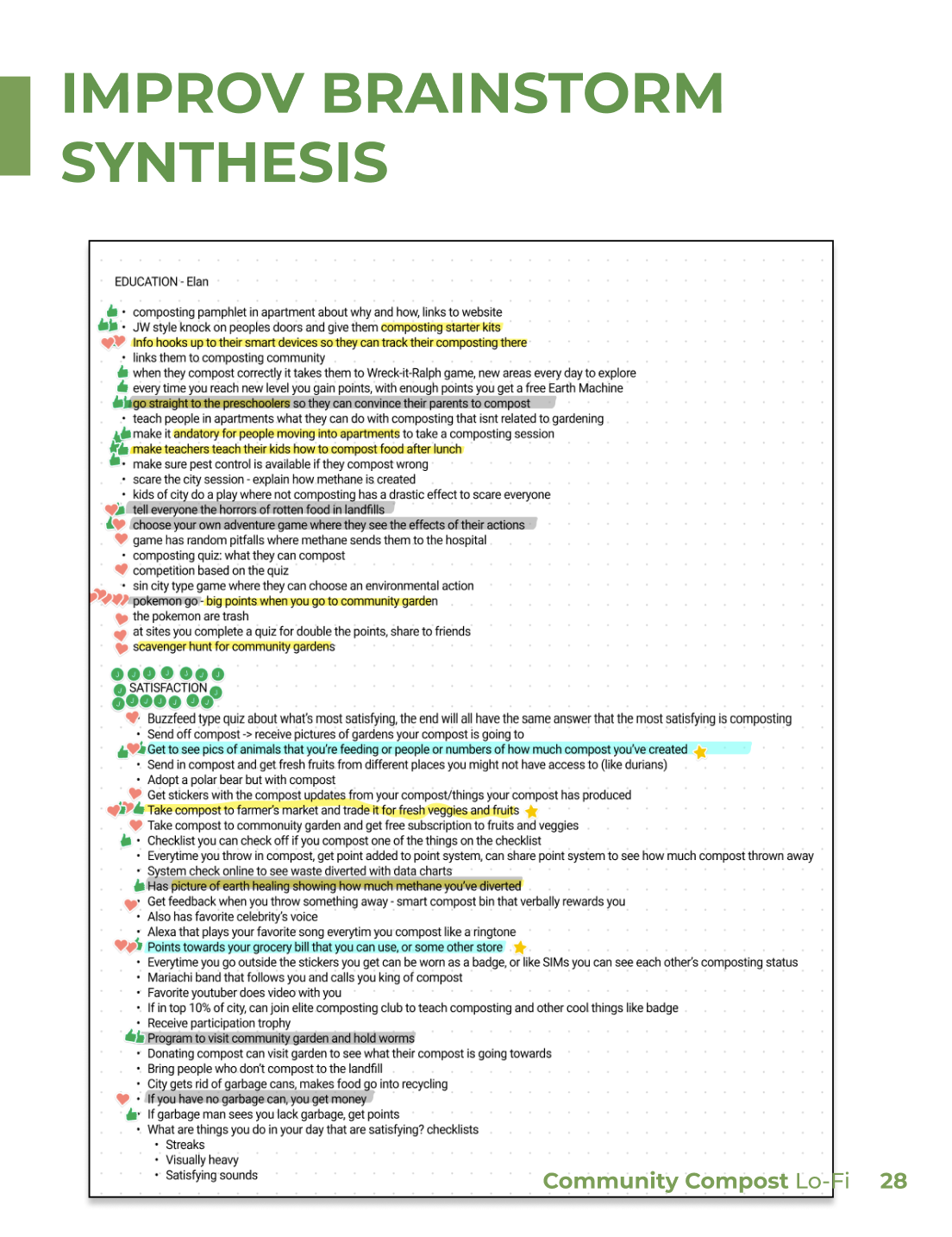
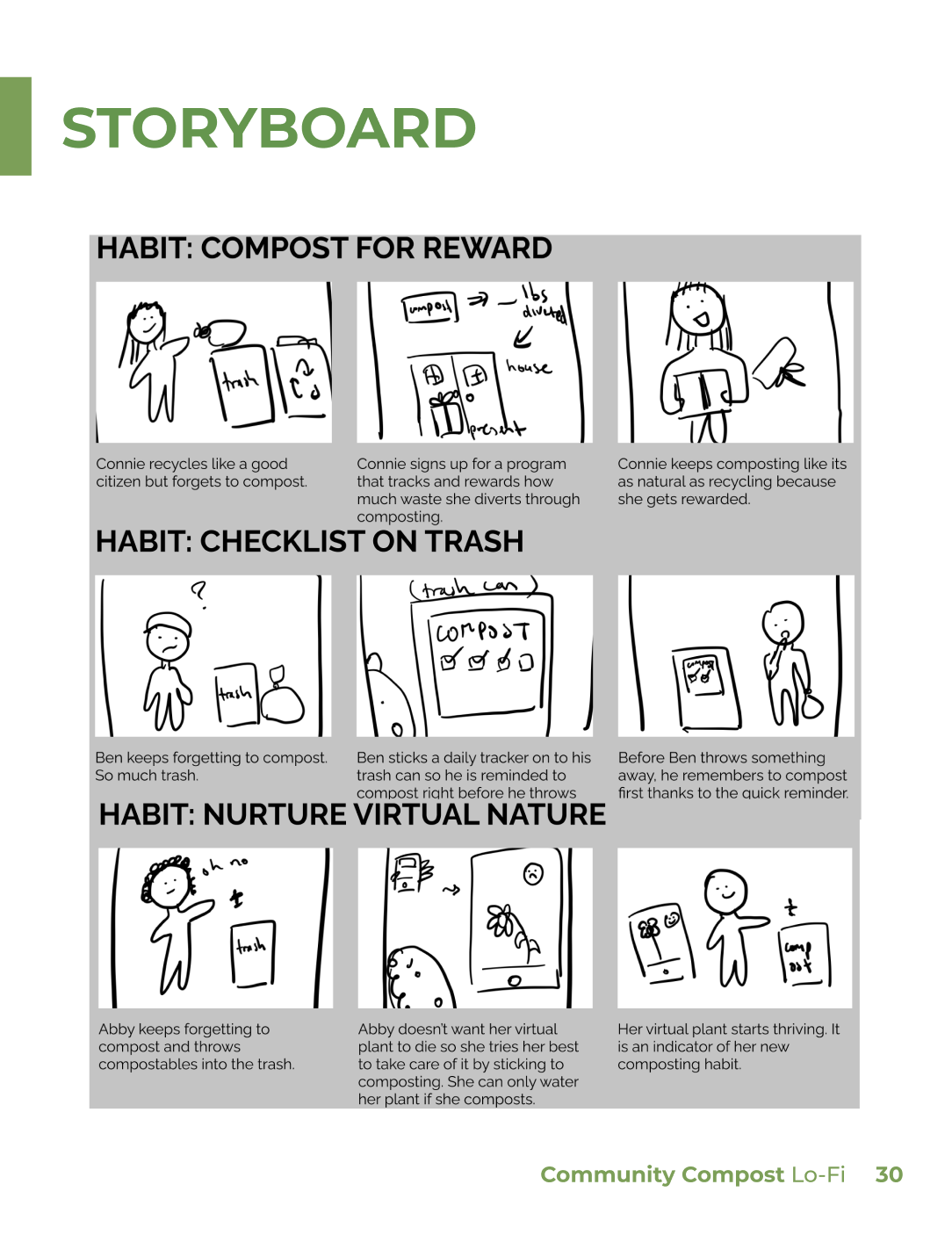
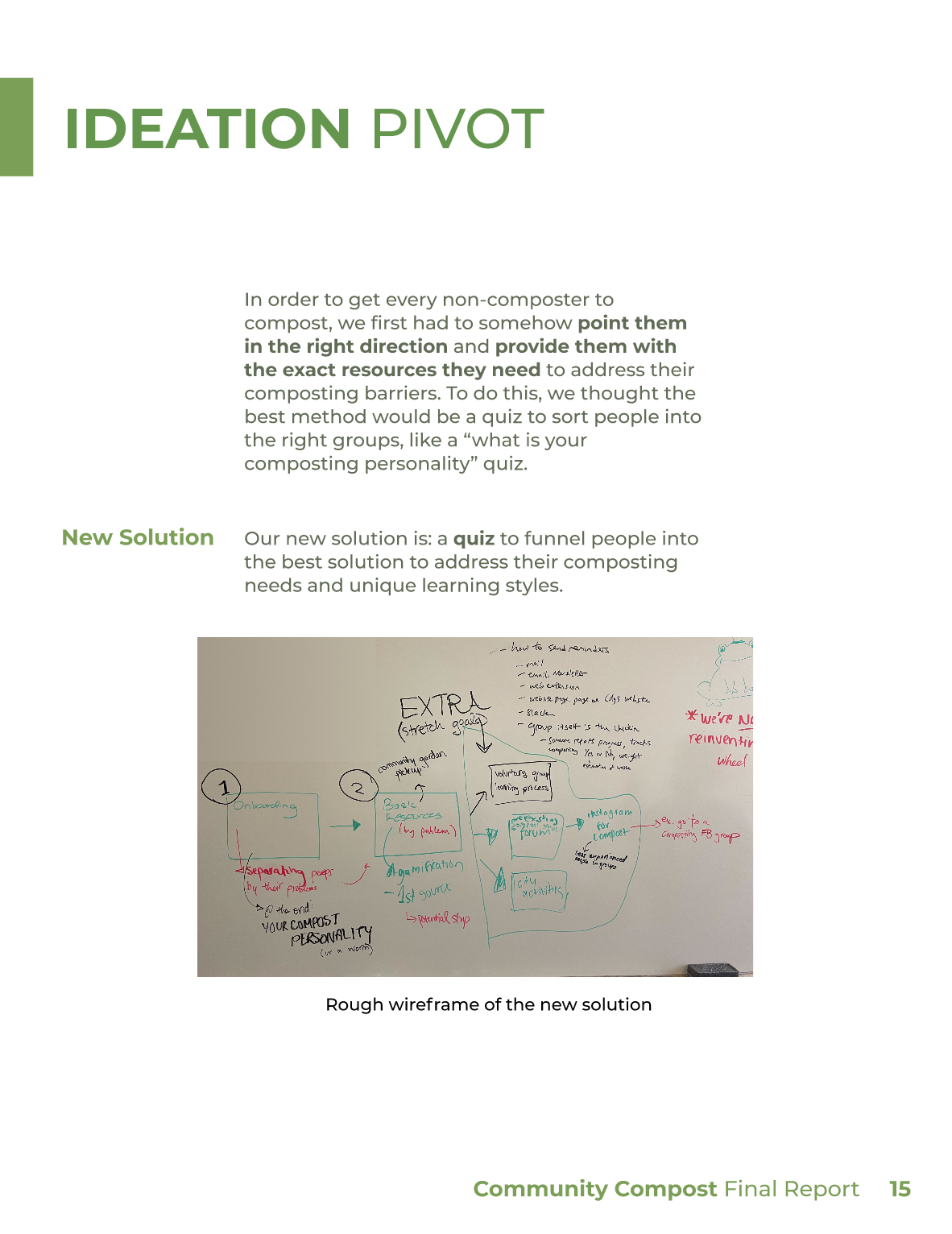
RESEARCH AND LO-FI
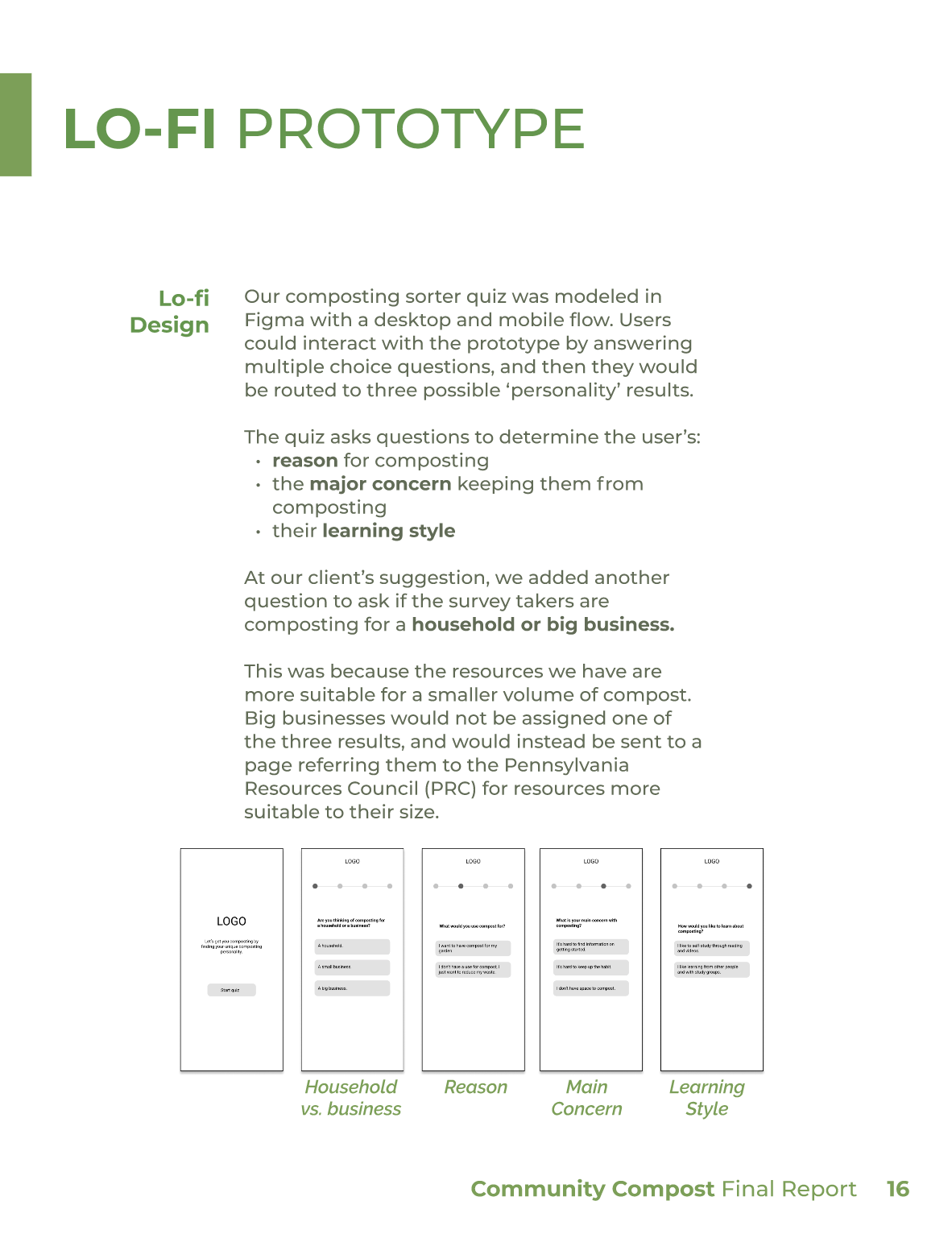
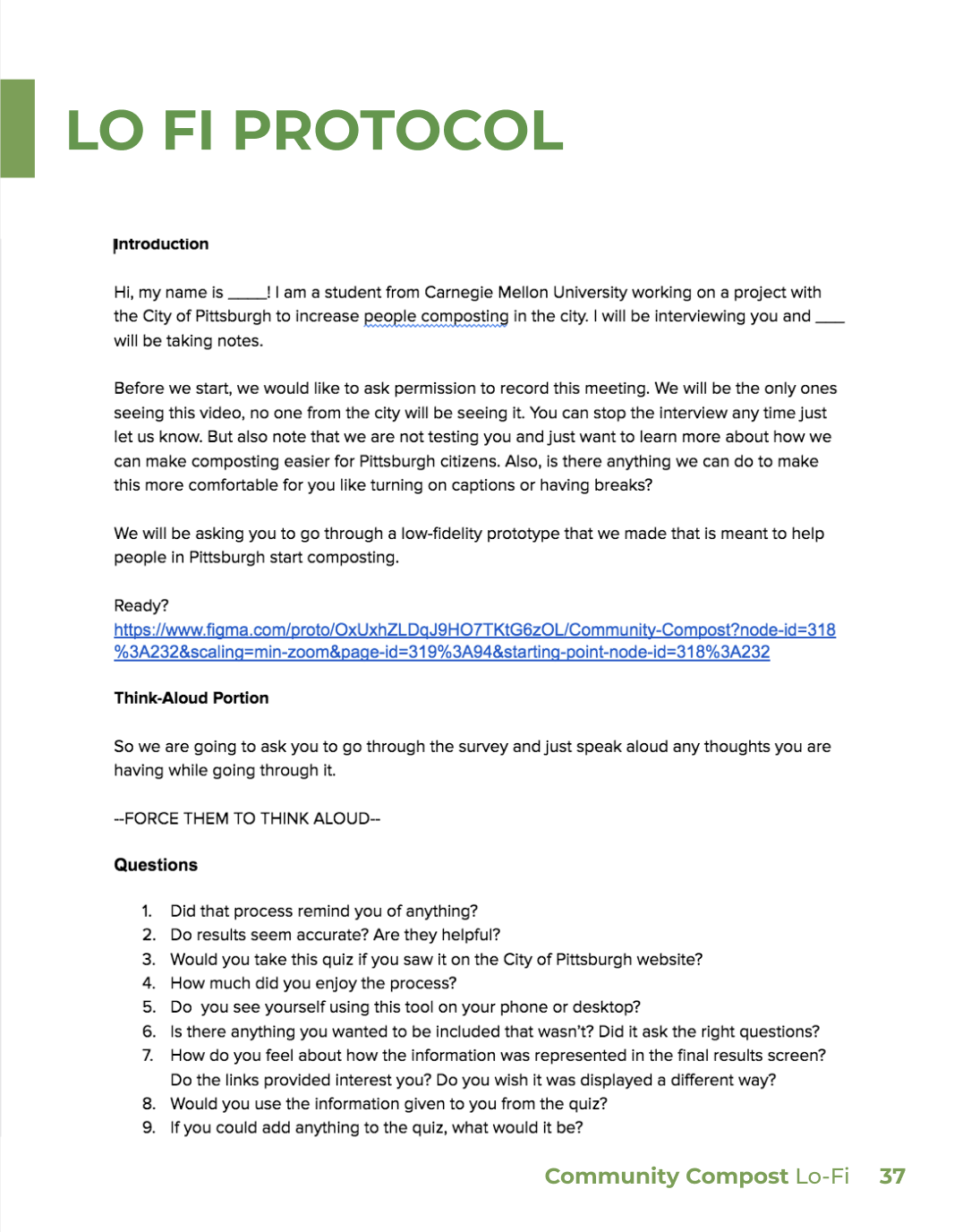
In the research and interview phase of our project, we discovered that community, habit, education, and satisfaction are all crucial factors in why people compost. We used these insights to create storyboards for potential ideas, tested these boards with non-composters, and moved forward in creating a lo-fi prototype that integrated the top 3.
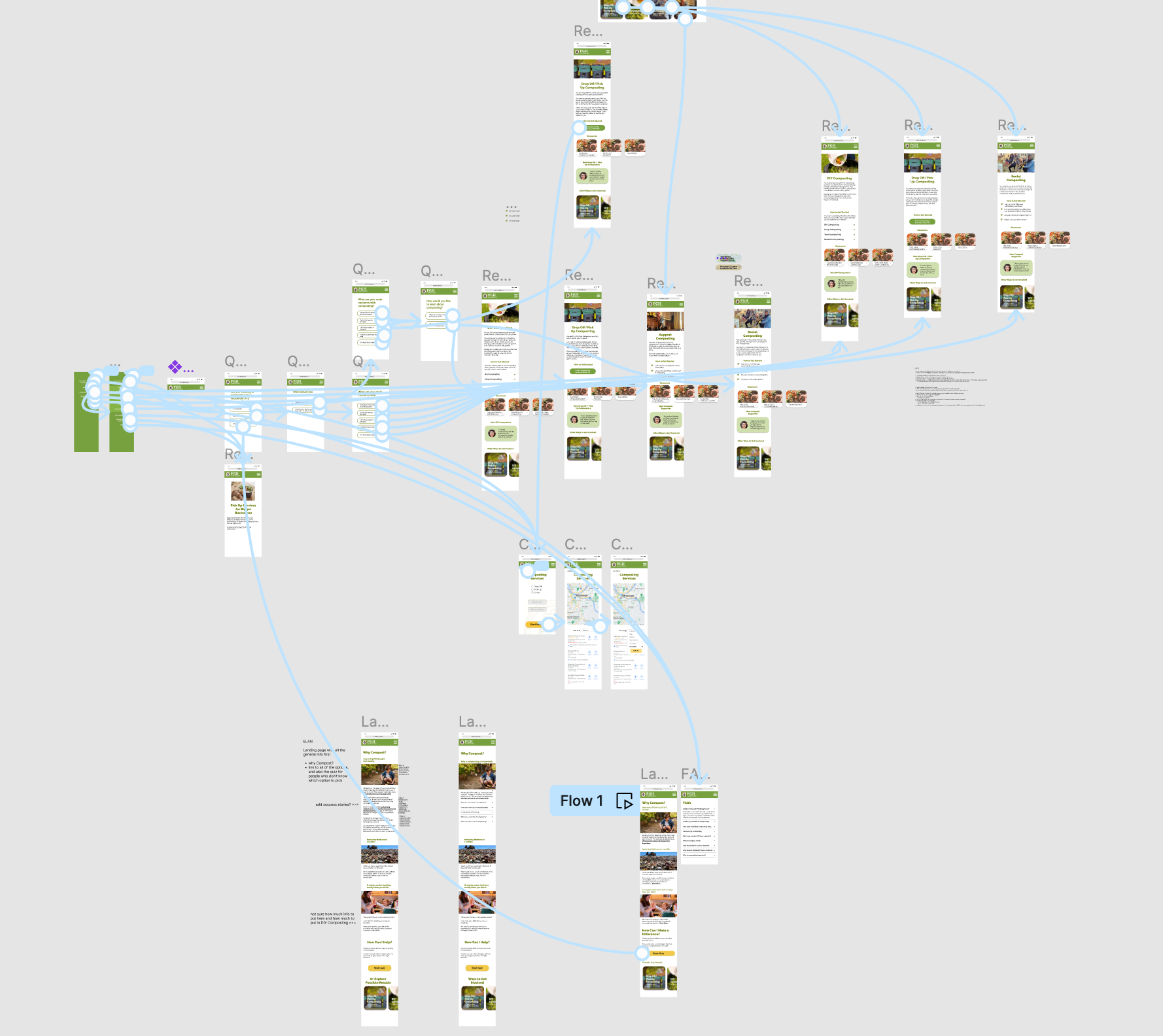
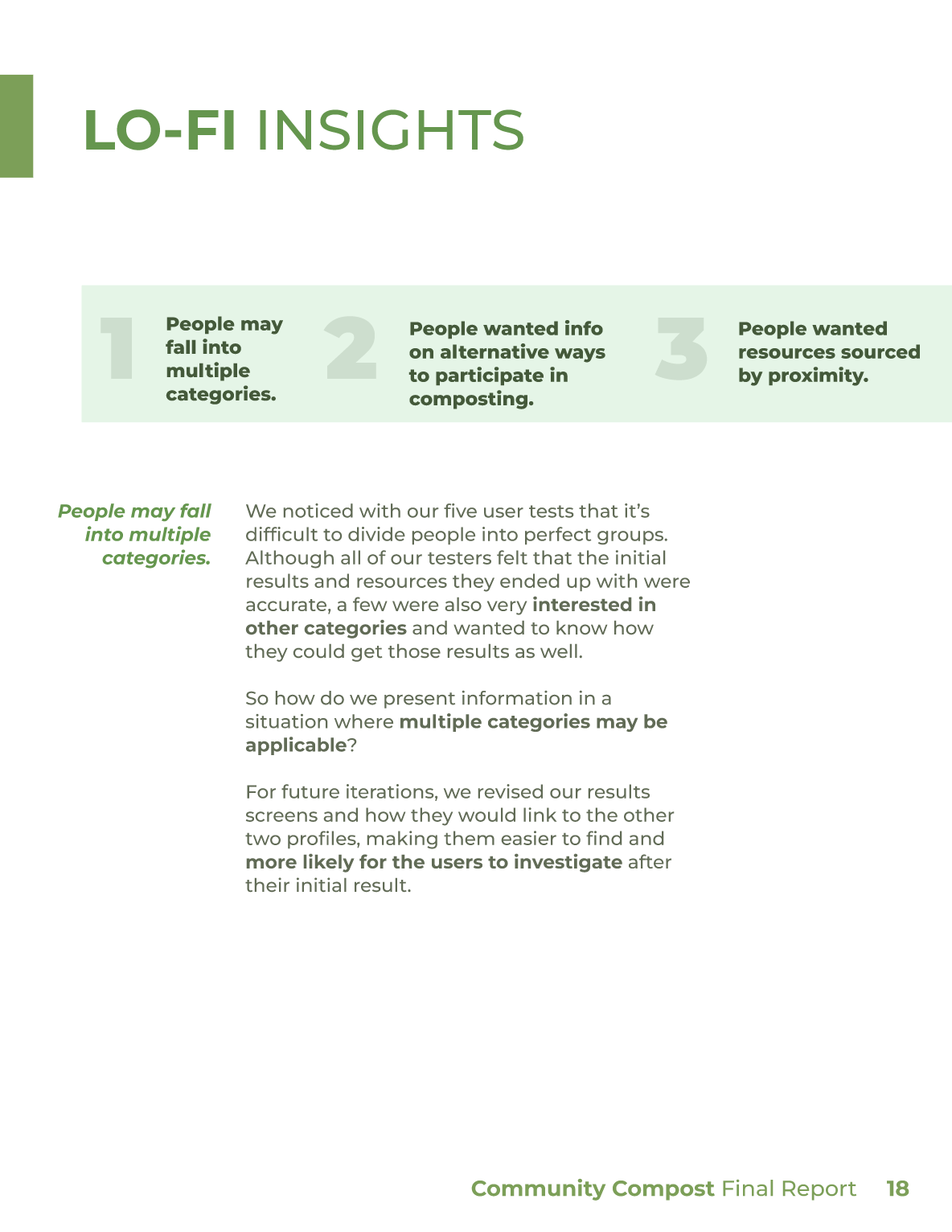
The lo-fi prototype uses a sorting quiz to funnel residents into the appropriate resources for them. After testing this lo-fi prototype with non-composters in Pittsburgh, users gave feedback that they wanted additional features, such as alternative ways to support composting in Pittsburgh and resources based on proximity. Some users fell into multiple quiz result categories, so for future iterations we would have to be aware of how we sorted them and allow them to discover all the resources they might find useful.
The lo-fi prototype uses a sorting quiz to funnel residents into the appropriate resources for them. After testing this lo-fi prototype with non-composters in Pittsburgh, users gave feedback that they wanted additional features, such as alternative ways to support composting in Pittsburgh and resources based on proximity. Some users fell into multiple quiz result categories, so for future iterations we would have to be aware of how we sorted them and allow them to discover all the resources they might find useful.
MID-FI AND HI-FI
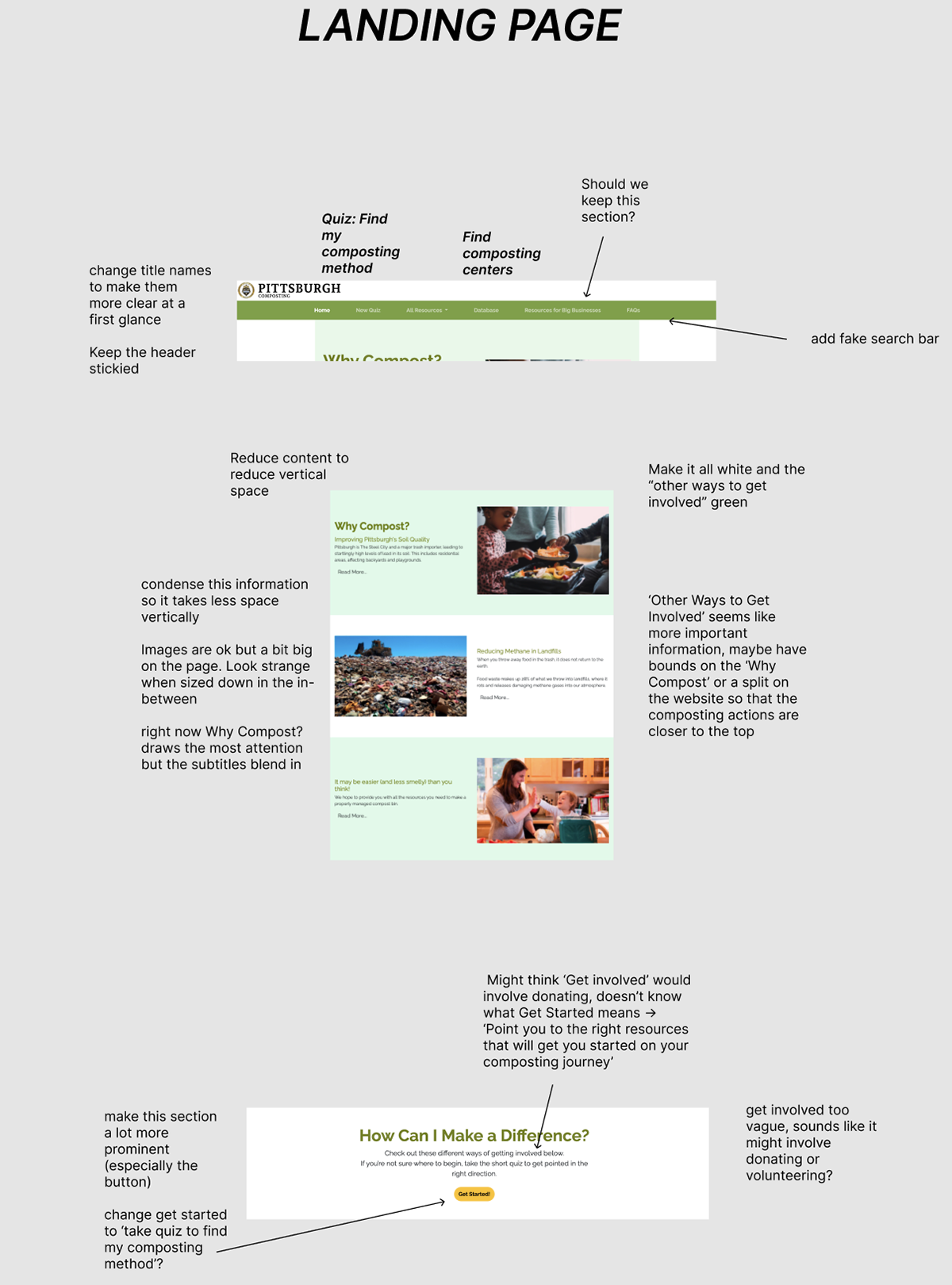
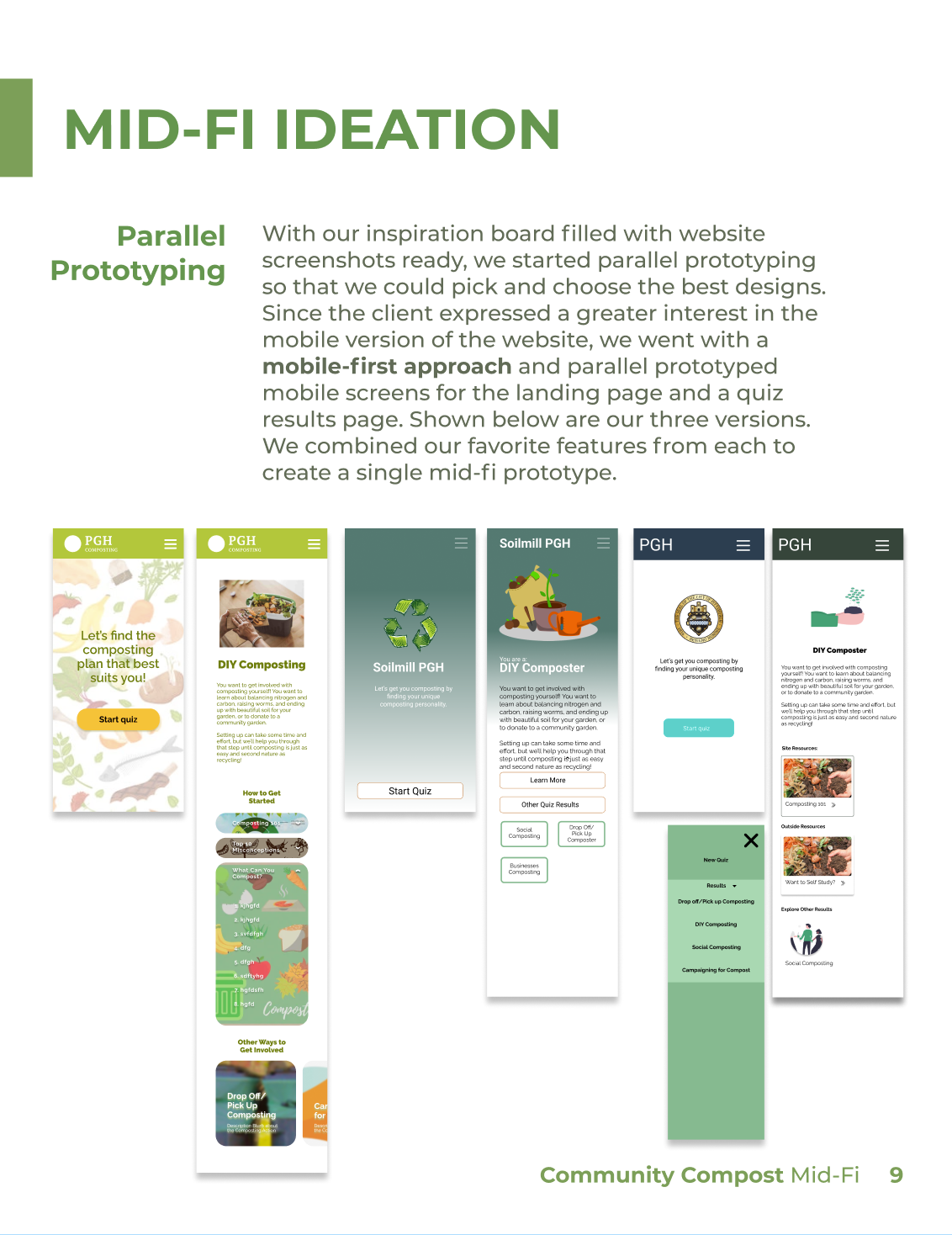
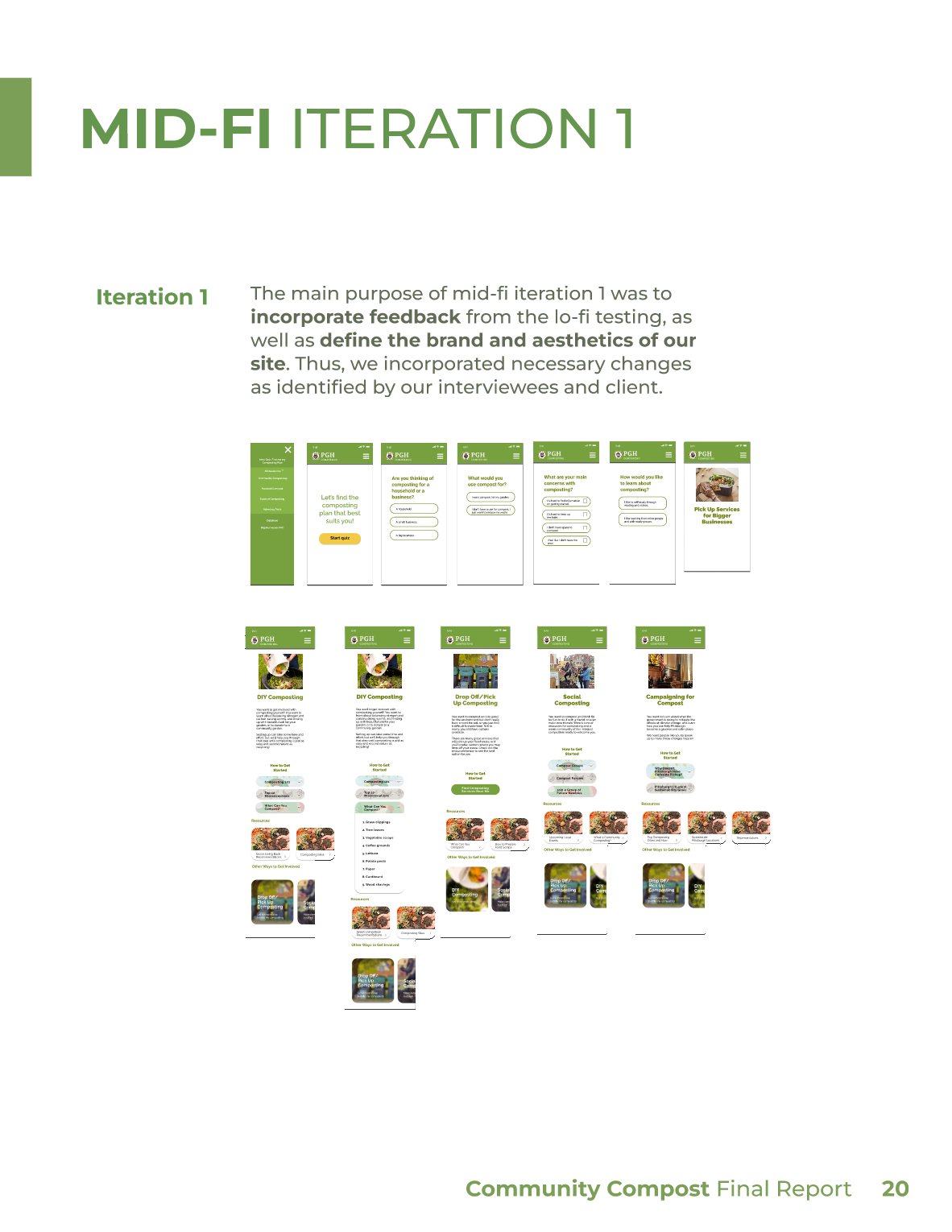
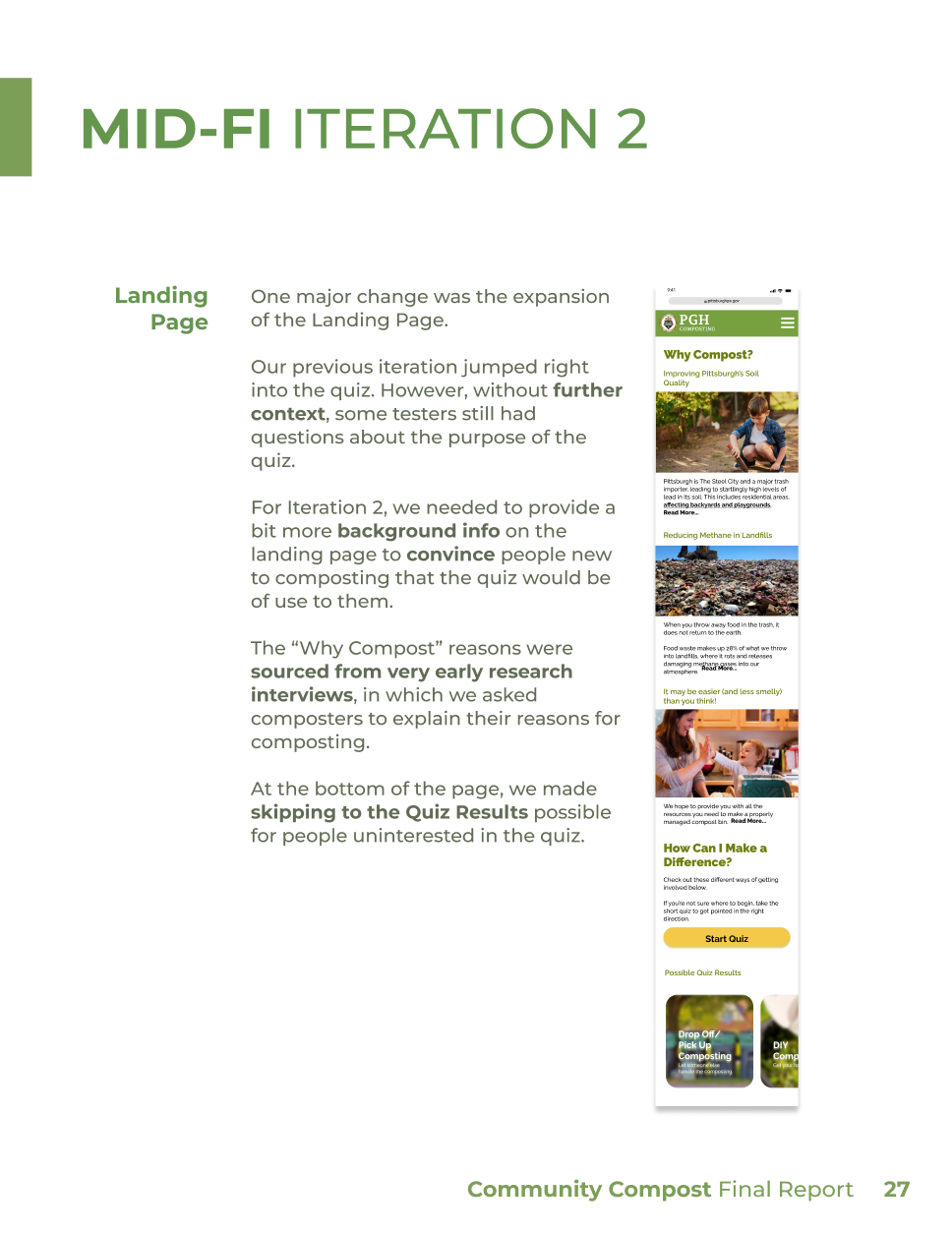
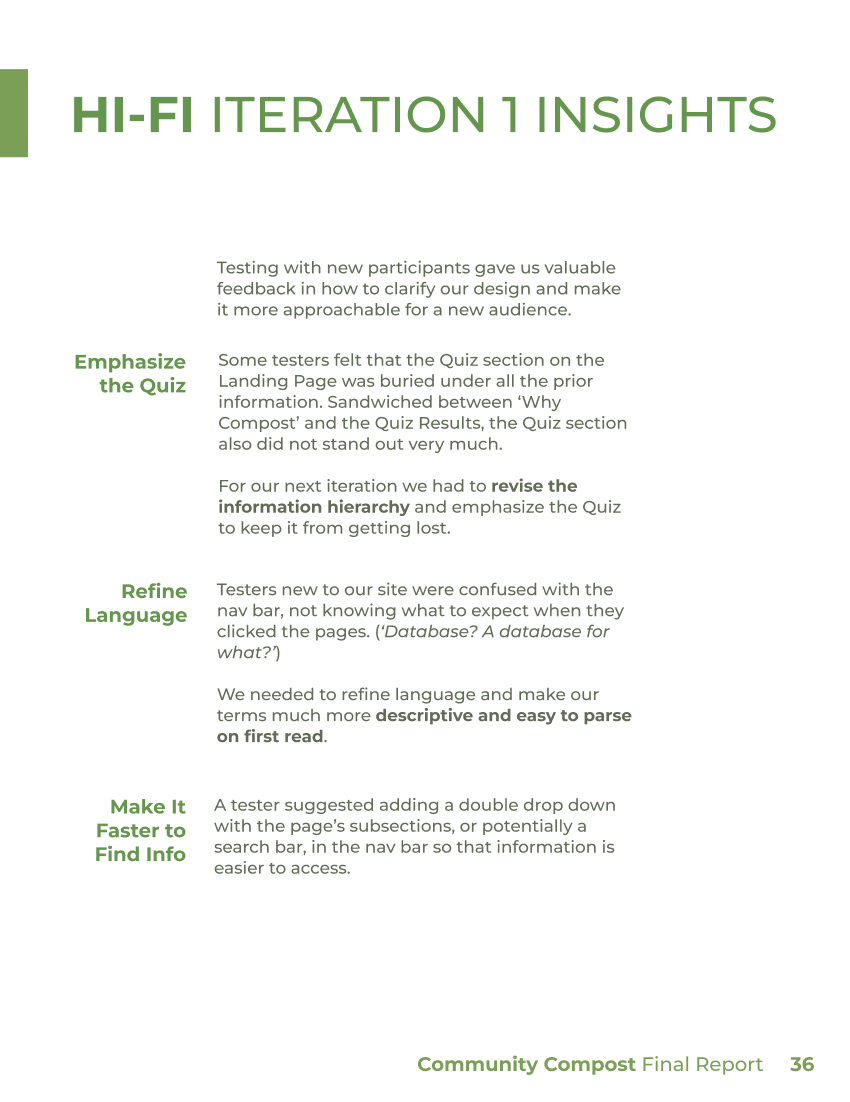
For our mid-fi prototype, we worked on adding more information to the resource pages, as well as improving page hierarchy and organization so that residents can easily find the information they want. Our hi-fi prototypes further developed the resources and refined the page-by-page interactions by moving into code implementation and testing with new users.
FUTURE
Our client Aftyn Giles will be taking our final hi-fi design and using it to build the full website. In the coming months, the City of Pittsburgh will be initiating a pilot program to test the effectiveness of our design on encouraging composting behavior in Pittsburgh residents.