A Post-Visit Health Companion for UHCS Students
HCI Course Project | Mobile App Prototype
OVERVIEW
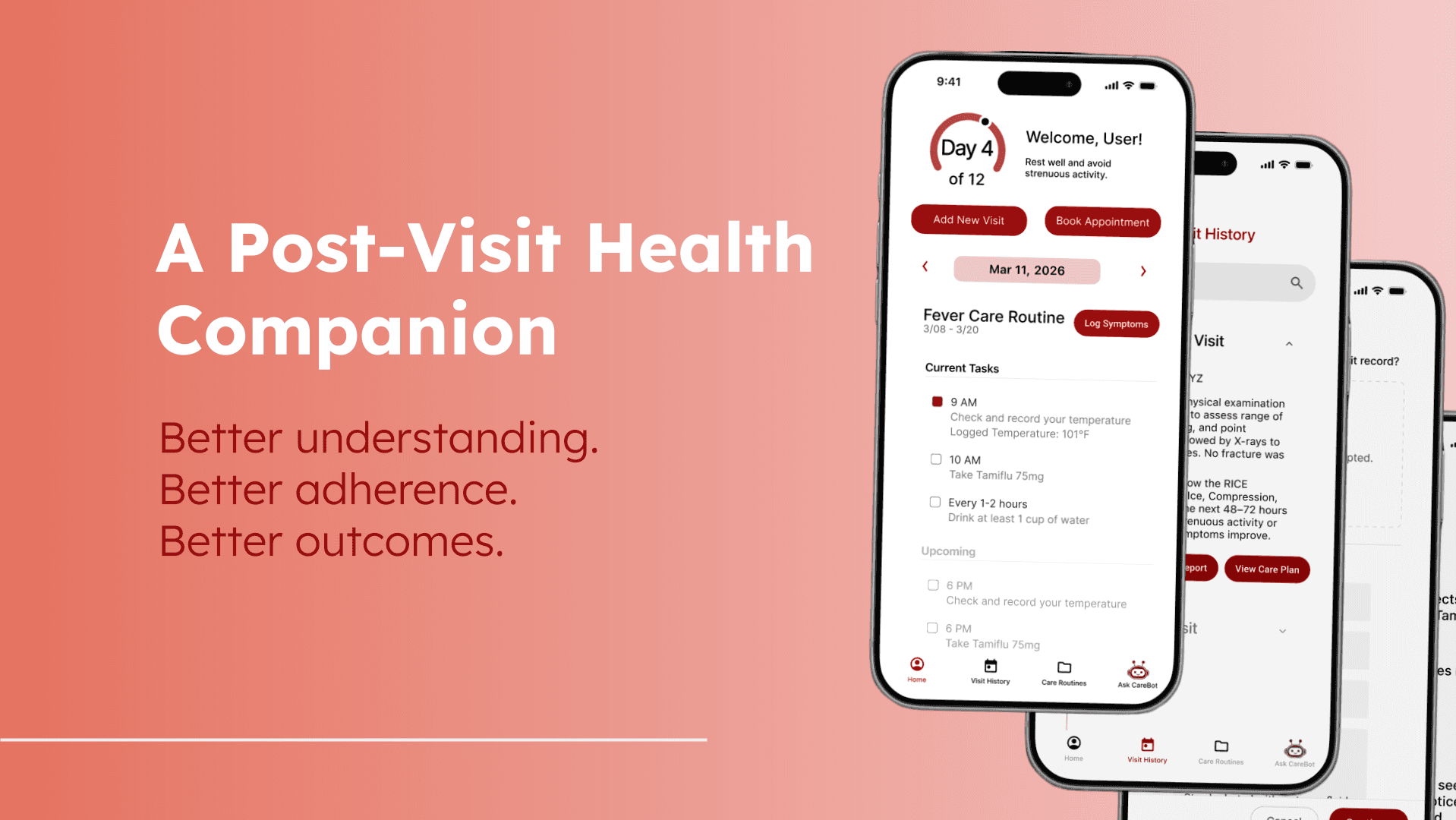
UHCS Post-Visit Care is a mobile app prototype designed to address the uncertainty students experience after medical appointments at Northeastern University Health and Counseling Services (UHCS). The app gives students a personal space to document visits, follow care instructions, track symptoms, and receive guidance between appointments from an AI chatbot.
Project Type: Academic HCI Course
Project Timeline: Spring 2026
Team: Elan Suder, Ming-Lun Lee, Sai Sirisha Volety
Advisor: Prof. Alexandro To
Deliverables: Figma prototype + presentation
ROLE
WHO IS THIS FOR?

Target Users: Northeastern students using university care services, particularly international students navigating the US healthcare system for the first time.
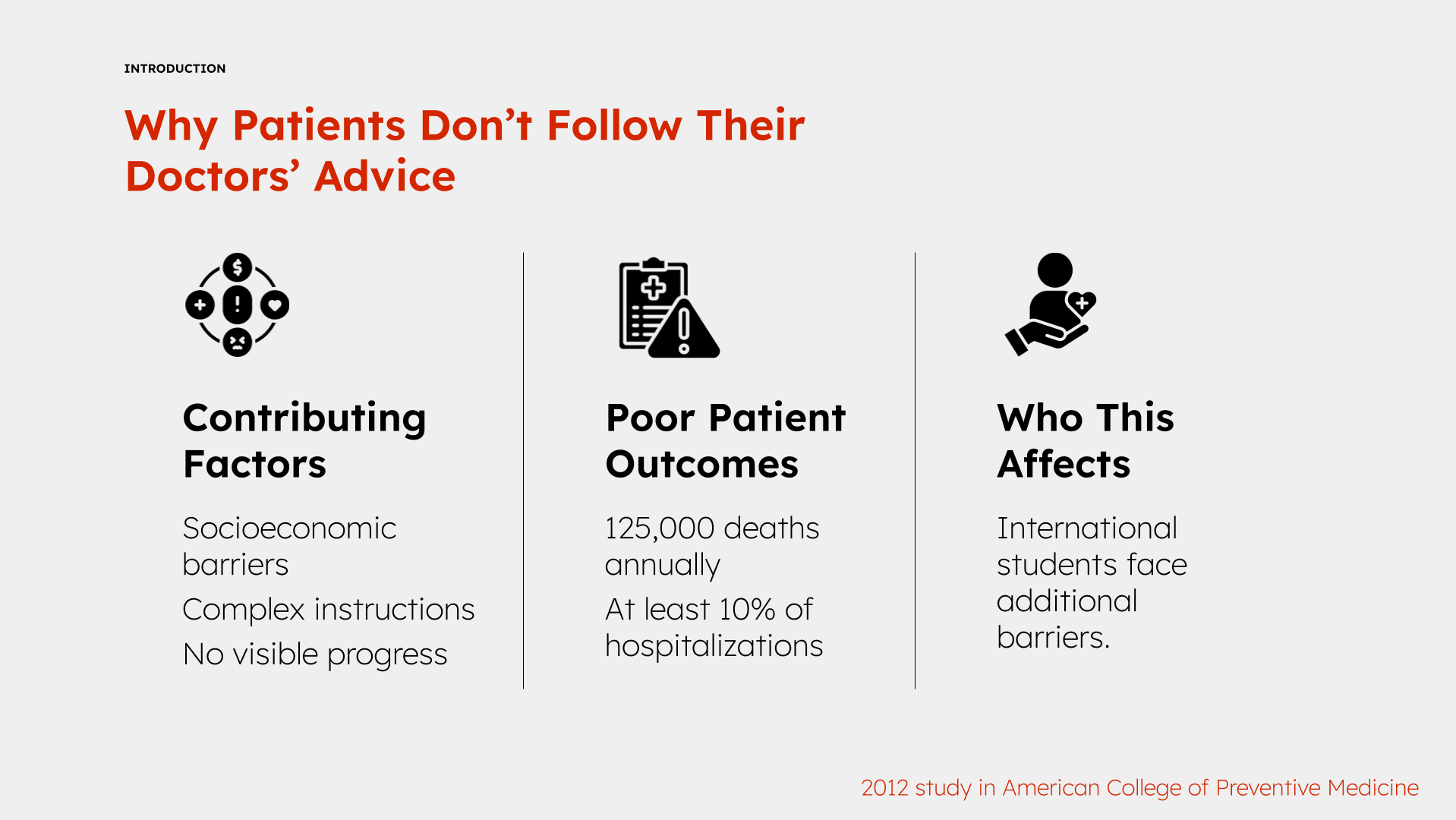
After an appointment, patients need to remember their instructions, track their symptoms, and know when to follow up. For international students, this problem is compounded by language barriers and no prior experience with US healthcare navigation.
We observed a need for better guidance in the recovery process after and in between health appointments.
RESEARCH
Our design process followed a full iterative UX cycle grounded in HCI methods. We began with a task analysis and hierarchical task breakdown of the post-visit care experience, identifying three core user needs: documenting visits for personal records, following structured care instructions, and knowing when to seek further care.
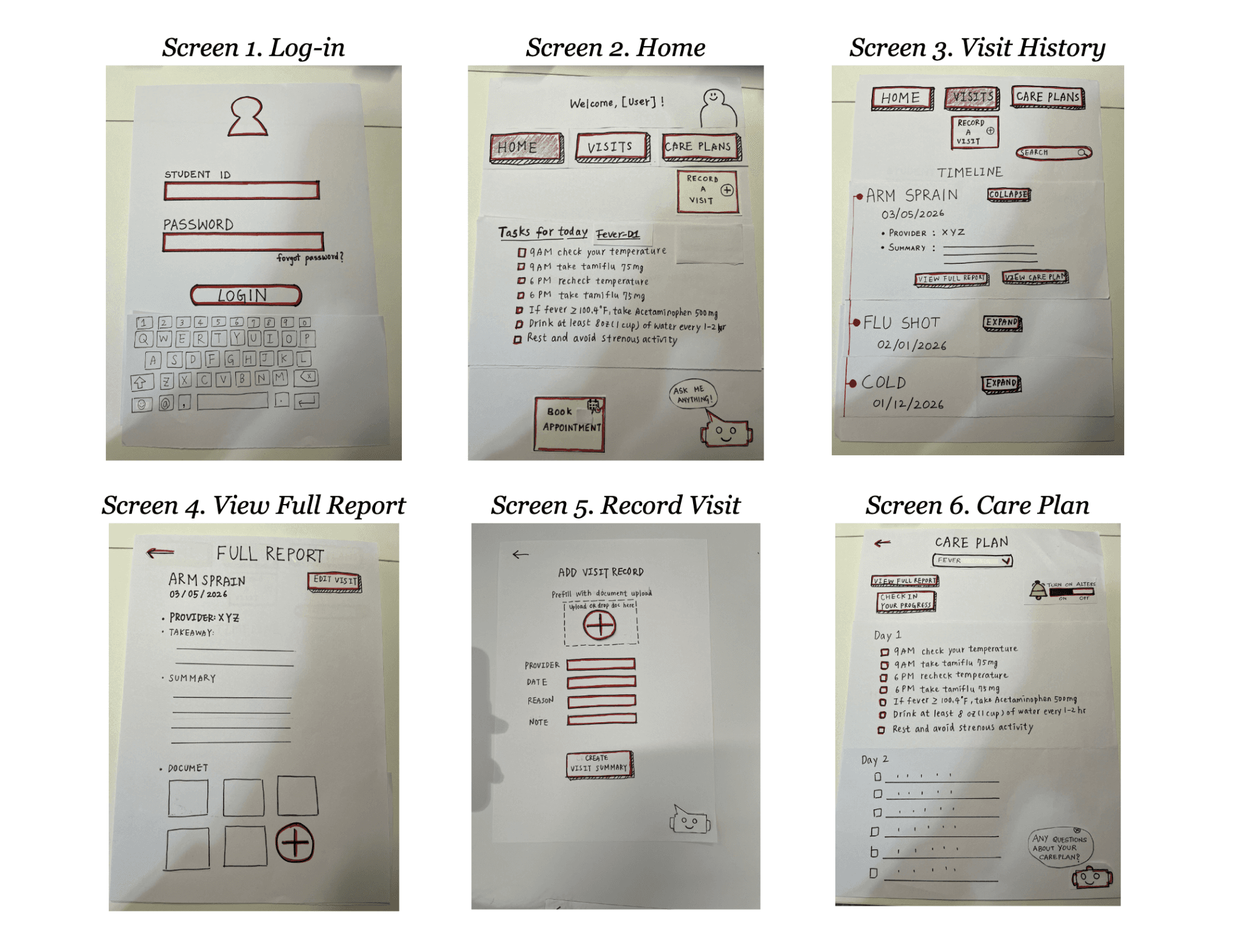
We conducted paper prototype testing with three Northeastern graduate students, two of whom were international, using think-aloud protocol and post-task interviews. We then built a mid-to-high fidelity Figma prototype and conducted a heuristic evaluation.
After prototyping revealed users weren't discovering the chatbot naturally, we redesigned it to initiate contact based on symptom data.
SOLUTION
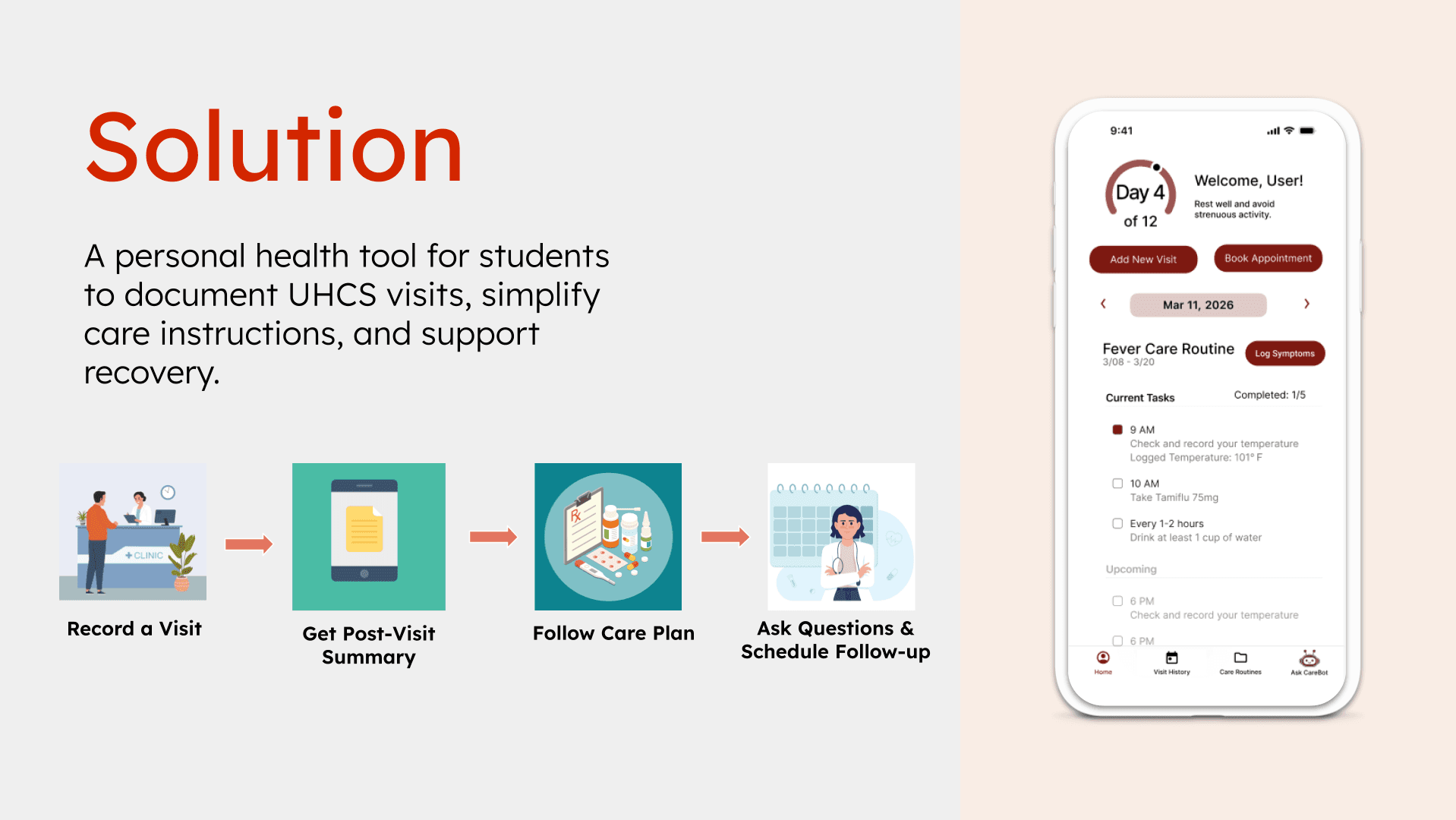
Users can document visits manually or by uploading visit documents and recordings, which auto-generate a structured visit summary. From that summary, they can create a care routine: a day-by-day checklist of provider instructions with built-in symptom logging.
When user data suggests a pattern of concern, CareBot proactively reaches out with a recommendation. Visit history is stored chronologically and can be updated with photos or documents at any time.
The app is intentionally patient-facing and requires no provider integration, lowering the barrier to adoption and giving students full ownership of their health records.
WHAT NEXT?
In the research phase of this project, I spoke with two friends about their personal experiences with health care. One goes through an exhausting process managing their chronic illness across several providers, while the other waited months (while periodically fainting!) to see their PCP, rather than use their university's health services.
I kept them in mind throughout the design of this project. This project was an exercise in designing for the burdens of being a patient, while giving patients a sense of control over their own health. Any tools designed in this space must account for patient anxieties and needs, and meet them at their own level of health literacy and trust.
If I were to continue this project, I would be interested in designing for the full care loop to manage the experience before the user even walks in, helping them prepare questions for their provider and arrive well-prepared. Maybe for someone like my friend, this kind of tool might have made the difference in feeling confident enough to seek care.