Kelly Strayhorn: Theater Events Finder
Event Discovery App Prototype
Arts & Entertainment
User Research, Information Architecture, Theater, Figma
Year:
2020
OVERVIEW
A search and selection interface for Kelly Strayhorn Theater (KST) designed to help traditional theatergoers discover smaller, more experimental performances. This practice case study investigated whether audiences familiar with Broadway shows could become engaged with niche, interactive theater by addressing information discoverability barriers.
Project Type: Academic Design & Research Project
Timeline: Fall 2020
Team: Elan Suder, Sai Swaminathan, Jackie Zhang, Andrew Kyroudis
Client: Kelly Strayhorn Theater
Deliverables: Figma prototype, research poster, client presentation
ROLE
WHO IS THIS FOR?
Target User: Traditional theater audiences interested in non-traditional performing arts.
Theater fans found shows at KST, an experimental performing arts center, harder to discover compared to Broadway musicals with extensive reviews and promotional material. The combination of unpredictable content and limited information made potential audiences uncomfortable committing to unfamiliar performances, even when those shows aligned with their interests in variety and artistic experimentation.
RESEARCH
We interviewed traditional theater fans, asking them to describe how they found and chose shows, particularly comparing their processes for Broadway versus smaller theaters.
Through contextual inquiry, think-alouds, directed storytelling, and speed-dating storyboard testing, we identified three key factors theatergoers consider:
Interactivity (how much audience-performer interaction)
Emotionality (whether shows tackle complex or lighthearted themes)
Discoverability (ease of finding information)
Affinity diagramming revealed interesting tensions: some participants enjoyed feeling like insiders through interactive performances, while others preferred watching from a distance; some sought emotionally complex shows addressing difficult issues, others wanted comfort and lighthearted experiences.
The critical insight emerged from the divided affinity diagram: traditional theatergoers did value what smaller theaters offered (variety, intimacy, experimentation) but couldn't find adequate information to make confident choices. They relied on word-of-mouth recommendations because smaller venues lacked the review infrastructure of Broadway.
SOLUTION
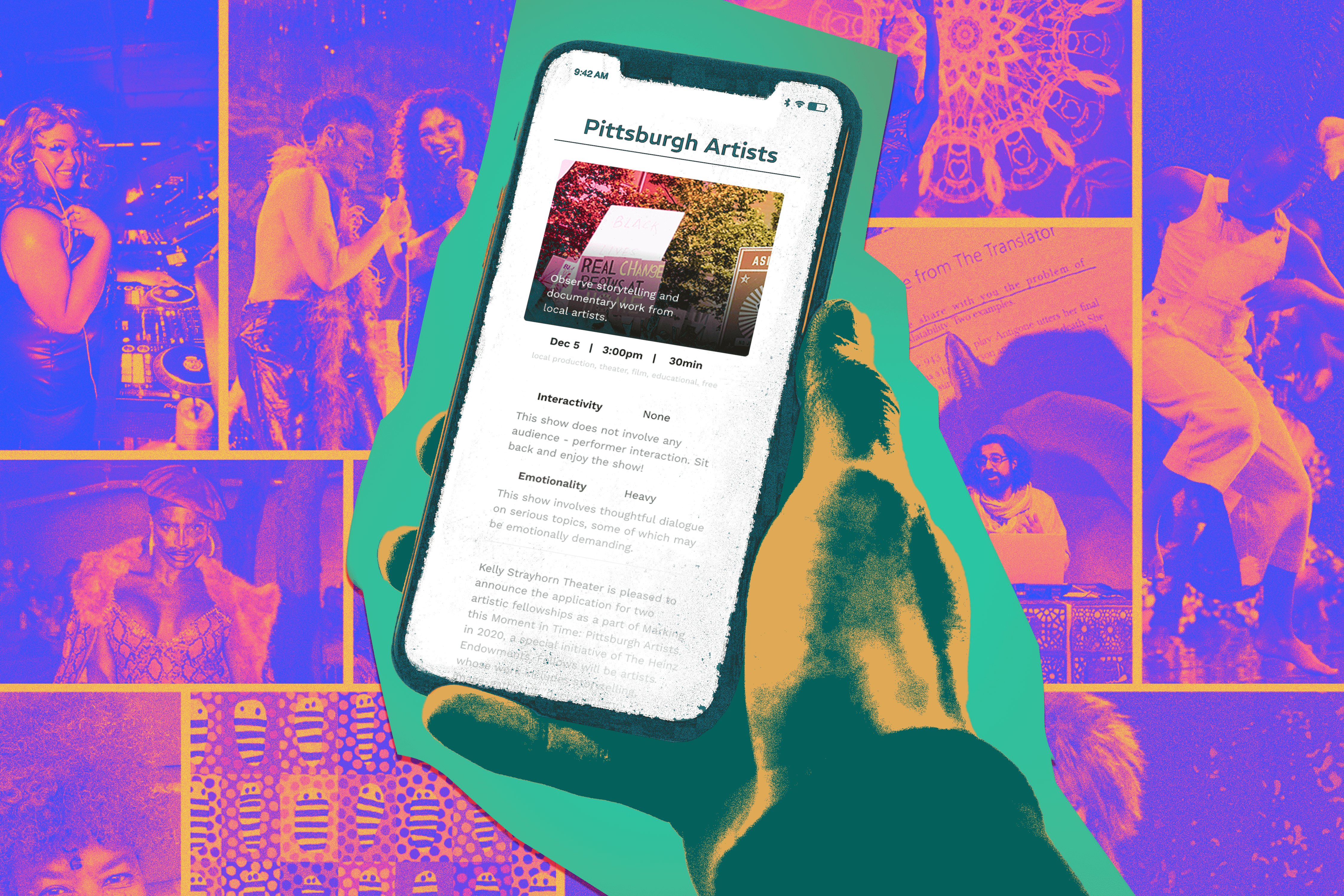
We designed a sortable event listing interface that organizes KST shows by the criteria traditional theatergoers actually use: chronological order, interactivity level, length, and emotionality. Each event card displays these attributes upfront (visible "Interactivity: High" and "Emotionality: Medium" tags), giving browsers immediate context about what to expect. The interface includes show summaries with ratings breakdowns indicating interactivity level with the audience. With a standardized, comparable format, we reduce the uncertainty that kept traditional audiences from taking chances on unfamiliar performances.
WHAT NEXT?
I'm a pretty casual theater fan, so I had fun interviewing these very passionate theatergoers on what they enjoyed about shows they watched, and how they chose shows to attend. This was my first HCI project and taught me a lot about how to gather data and make sense of it. (Lots of sticky notes!)