Grocery Shopping in the Pandemic
Responsive App Prototype
OVERVIEW
A responsive web application concept addressing pandemic-era grocery shopping challenges through shared carts and recipe-based discovery. This academic project used directed storytelling and journey mapping to identify how digital grocery experiences could recreate the serendipity of in-store browsing while facilitating group household shopping.
Project Type: Academic Design & Research Project
Timeline: Fall 2020
Team: Elan Suder, Matthew Guo, Kylon Chiang, Lea Emerlyn
Deliverables: Mobile and desktop prototypes in Figma, process book, final pitch presentation
ROLE
WHO IS THIS FOR?
Target User: Households (particularly students and young adults living with roommates) who need to coordinate grocery shopping.
Online grocery shopping eliminated COVID exposure but lost the lived experience people valued from in-person shopping. In person, you can browse for inspiration, discover unexpected items, and enjoy the social aspect of shopping together. Students living with housemates found it particularly difficult to coordinate orders, compile shared lists, avoid duplicate purchases, and fairly split costs without tedious manual tracking.
RESEARCH
We conducted 12 directed storytelling interviews (30 minutes each via Zoom and in-person), asking participants to walk us through a specific recent grocery shopping experience from planning to unpacking.
Individual journey maps revealed emotional highs and lows across six stages: Planning, Browsing, Checkout, Waiting, Delivery, and Unpacking. The consolidated journey map showed browsing had the steepest negative dip: people missed serendipitous discovery, and felt anxious about forgetting items or duplicating purchases when coordinating with housemates.
Through persona development and sliding scales, we identified three user types but focused on the shared pain point: the difficulty of compiling household lists and the loss of in-store browsing joy.
SOLUTION
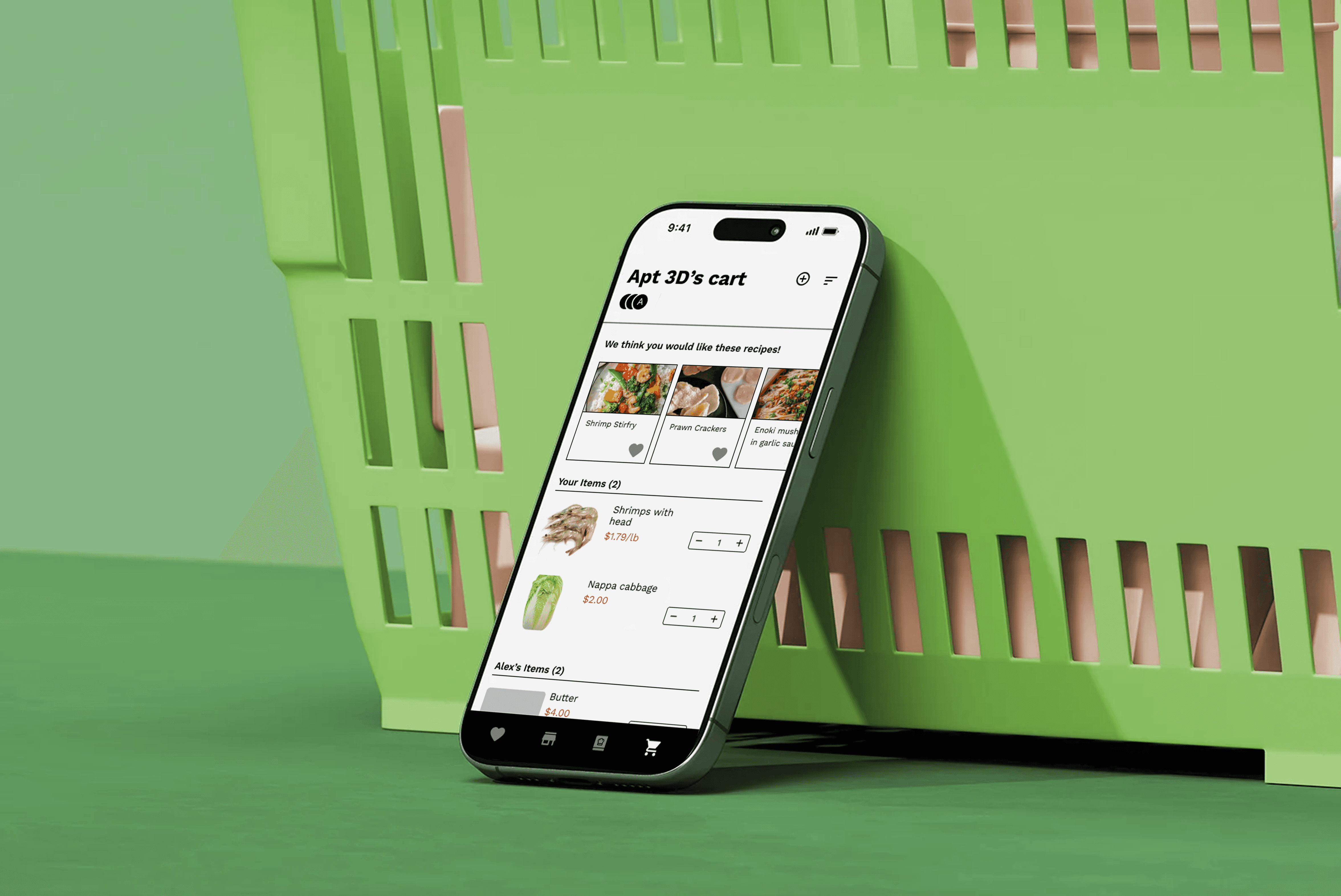
Household members can create shared carts with QR code or text/email invites, allowing everyone to add items throughout the week while seeing who added what in real time.
Based on items already added, users receive recipe recommendations, encouraging users to discover new ingredients they might not have considered. Each recipe card shows a quick-add option for missing ingredients with substitution suggestions, reducing friction while introducing variety.
The responsive design prioritizes different tasks by device: desktop emphasizes large recipe cards for browsing and exploration, while mobile streamlines cart creation, sharing, and checkout for on-the-go coordination.