Indoor Dining Assistant: A Conversational Interface for Yelp
Voice Interface Prototype
Restaurant Discovery
Voice Interface, Conversational Design, UX/UI Design, COVID-19, Mobile App
Year:
2021
OVERVIEW
A conversational user interface (CUI) prototype designed to help users make informed dining decisions during COVID-19 by providing personalized risk assessments and recommendations. This academic project used Yelp as a practice case study to explore how voice design could transform restaurant discovery.
Project Type: Academic Design & Research Project
Timeline: Spring 2021
Team: Elan Suder, Onyekachi Nwabueze, Sylvia Ding, Jenny Xin
Course: IxDS2 P3, Team B8
Deliverables: Presentation deck + Interactive voice interface demos + Design rationale documentation
ROLE
WHO IS THIS FOR?
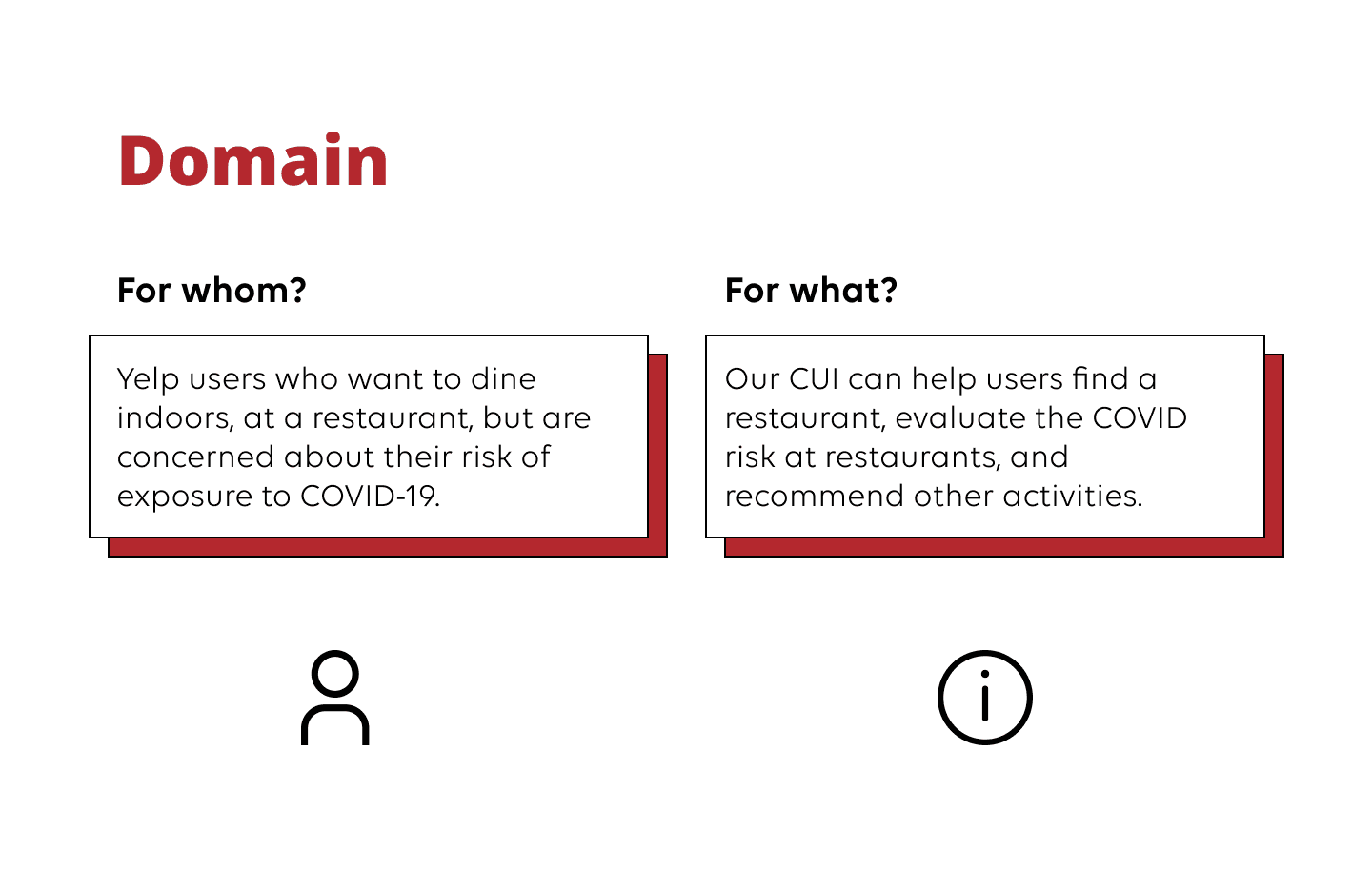
During COVID-19, existing search interfaces couldn't address the nuanced, personal nature of pandemic risk assessment. Users with different vaccination statuses and comfort levels needed varied support, but traditional tools offered one-size-fits-all information that left them uncertain about dining choices.
RESEARCH
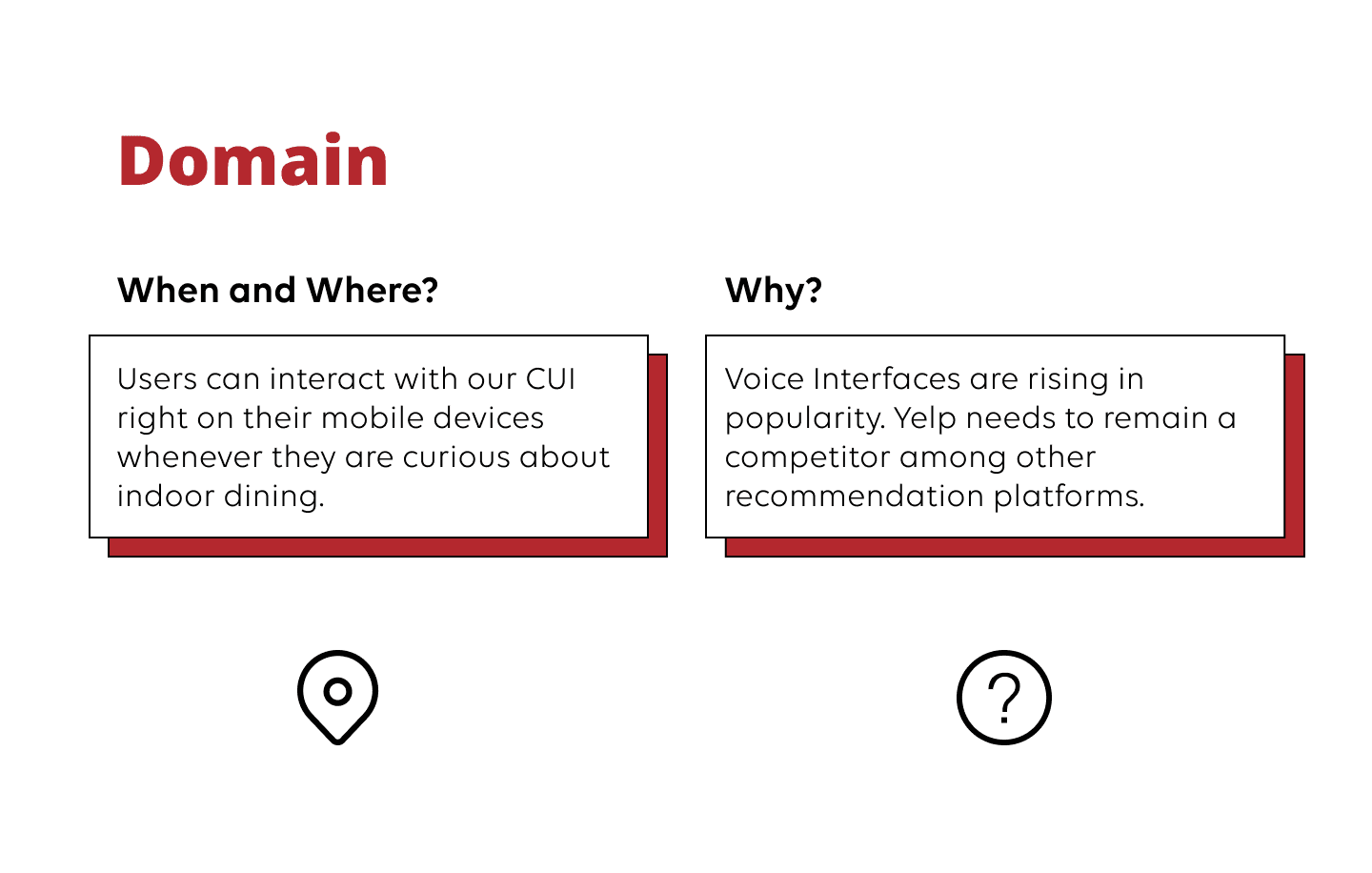
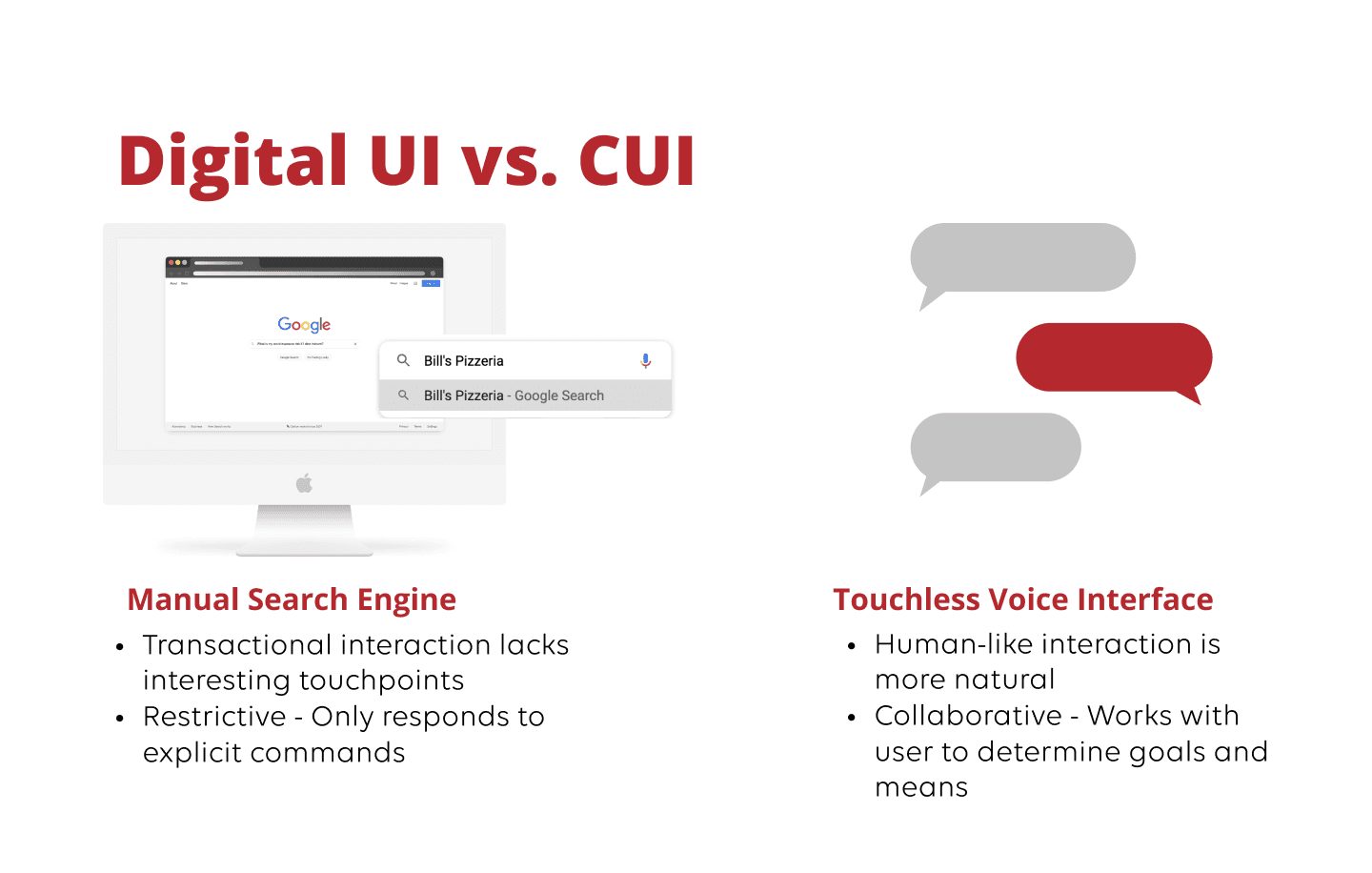
We started by asking: why use voice at all? Through comparative analysis, we found that conversational interfaces excel at collaborative problem-solving in ways that traditional search bars simply can't. While a search bar waits for commands, a voice interface can actually work with users to unpack their goals. CUIs are not simply a source of information, but a conversation partner who can help users think through complex, personal decisions.
SOLUTION
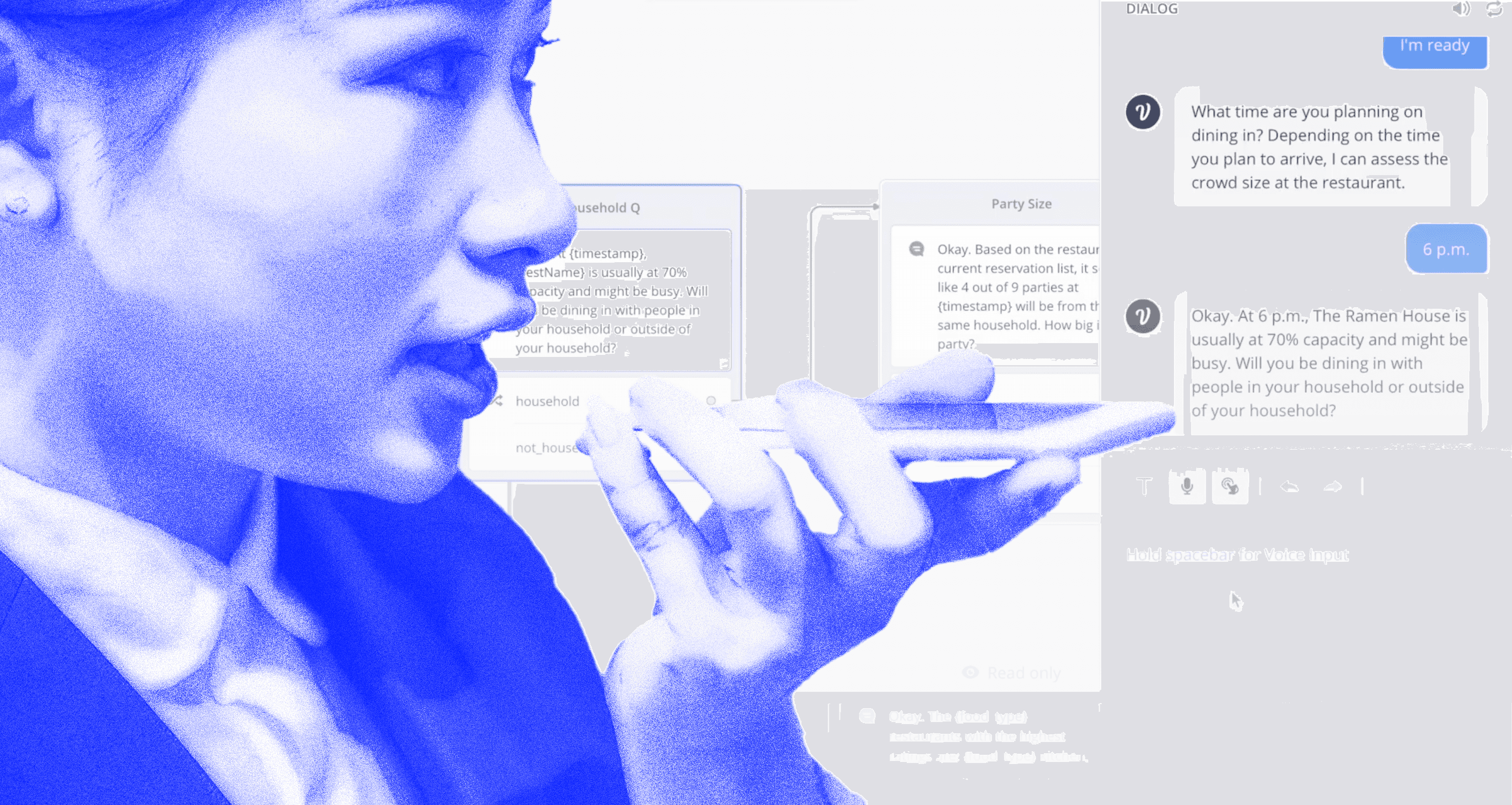
Our CUI, mocked up in Figma/Miro and created in Voiceflow, was implemented with alternative paths to allow the user a degree of agency and variation in the interaction. Instead of throwing COVID statistics at people, our CUI meets users where they are emotionally and practically, adapting its approach based on their tone and needs.
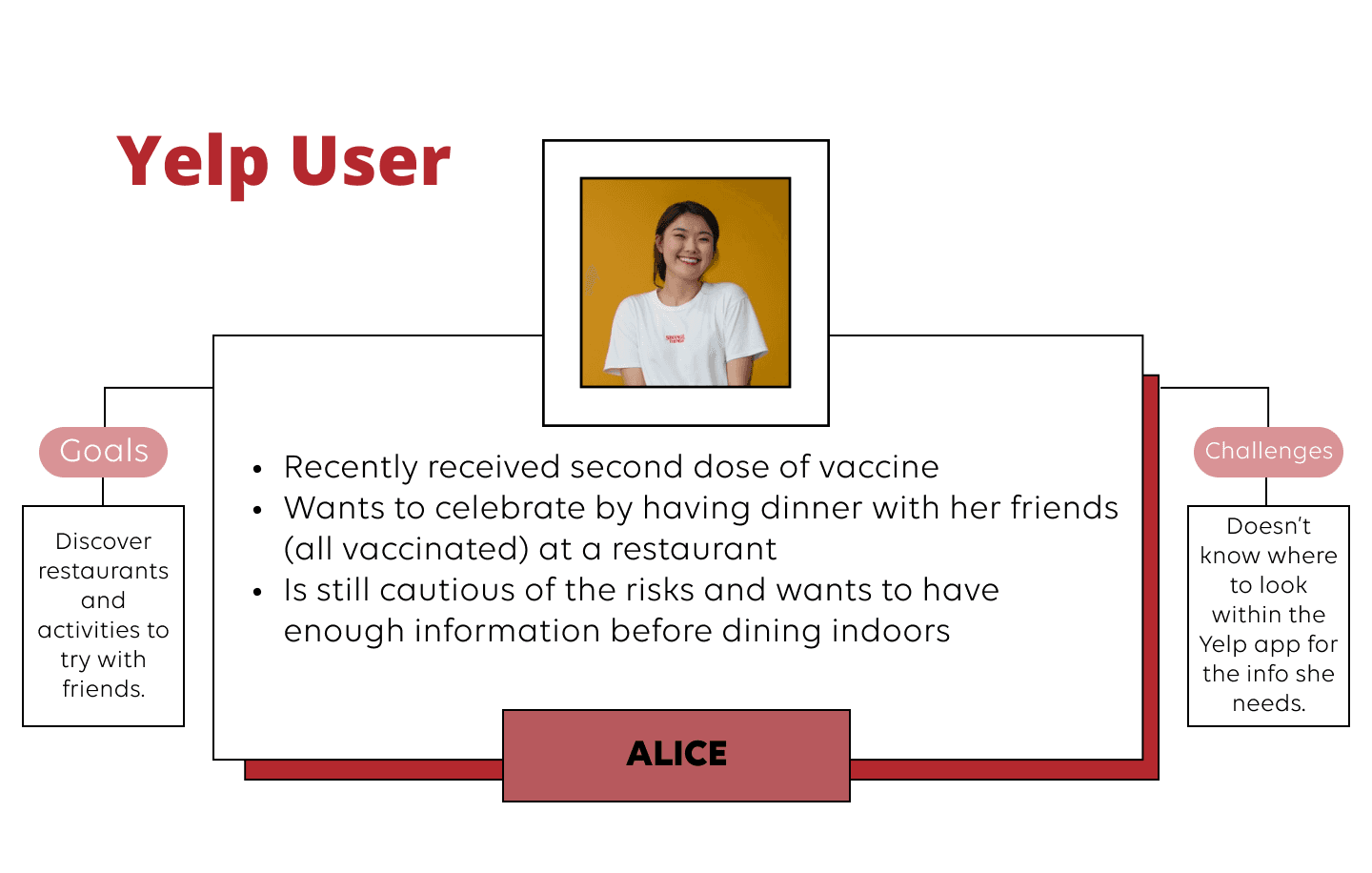
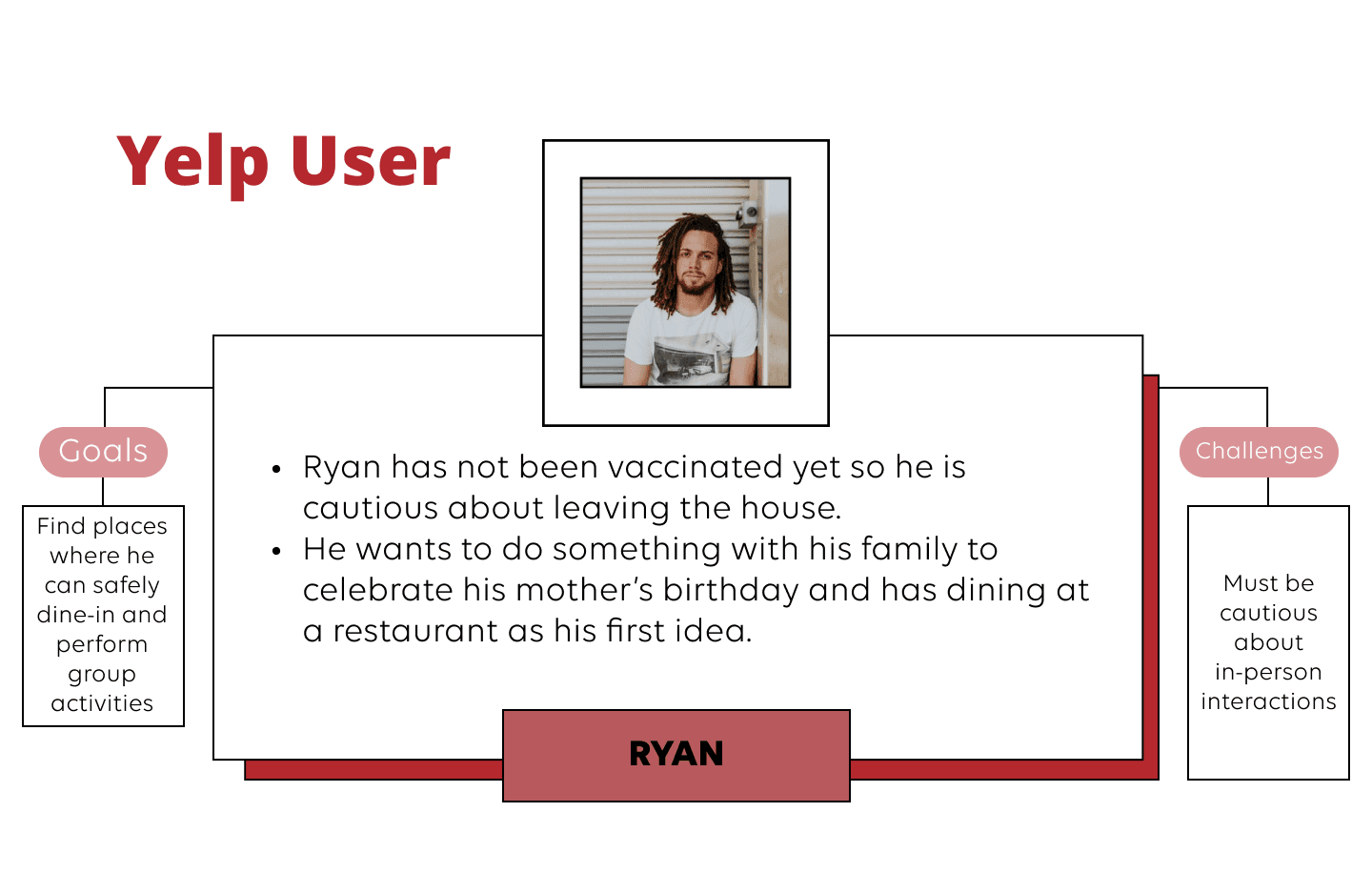
We developed personas like Alice (vaccinated, cautiously optimistic) and Ryan (unvaccinated, very cautious) to understand how different people process risk differently.
When Ryan says he's uncomfortable, the assistant doesn't just show him restaurants with outdoor seating; it explores what he's really trying to accomplish (celebrating his mom's birthday) and suggests alternatives he might not have considered. The key was designing a tone that informs without lecturing, respecting that ultimately, users make their own choices.

WHAT NEXT?
This prototype revealed broader opportunities for conversational interfaces in discovery platforms beyond just pandemic dining. We recommended investment into this feature to differentiate Yelp as a genuine discovery partner rather than a passive search engine.
Yelp could extend this approach beyond COVID to help users navigate any "what should we do?" moment, helping users articulate what they actually want and finding experiences that match those deeper goals.