SoilMillPGH: A Community Composting Initiative
Municipal UX Research | Educational Platform
OVERVIEW
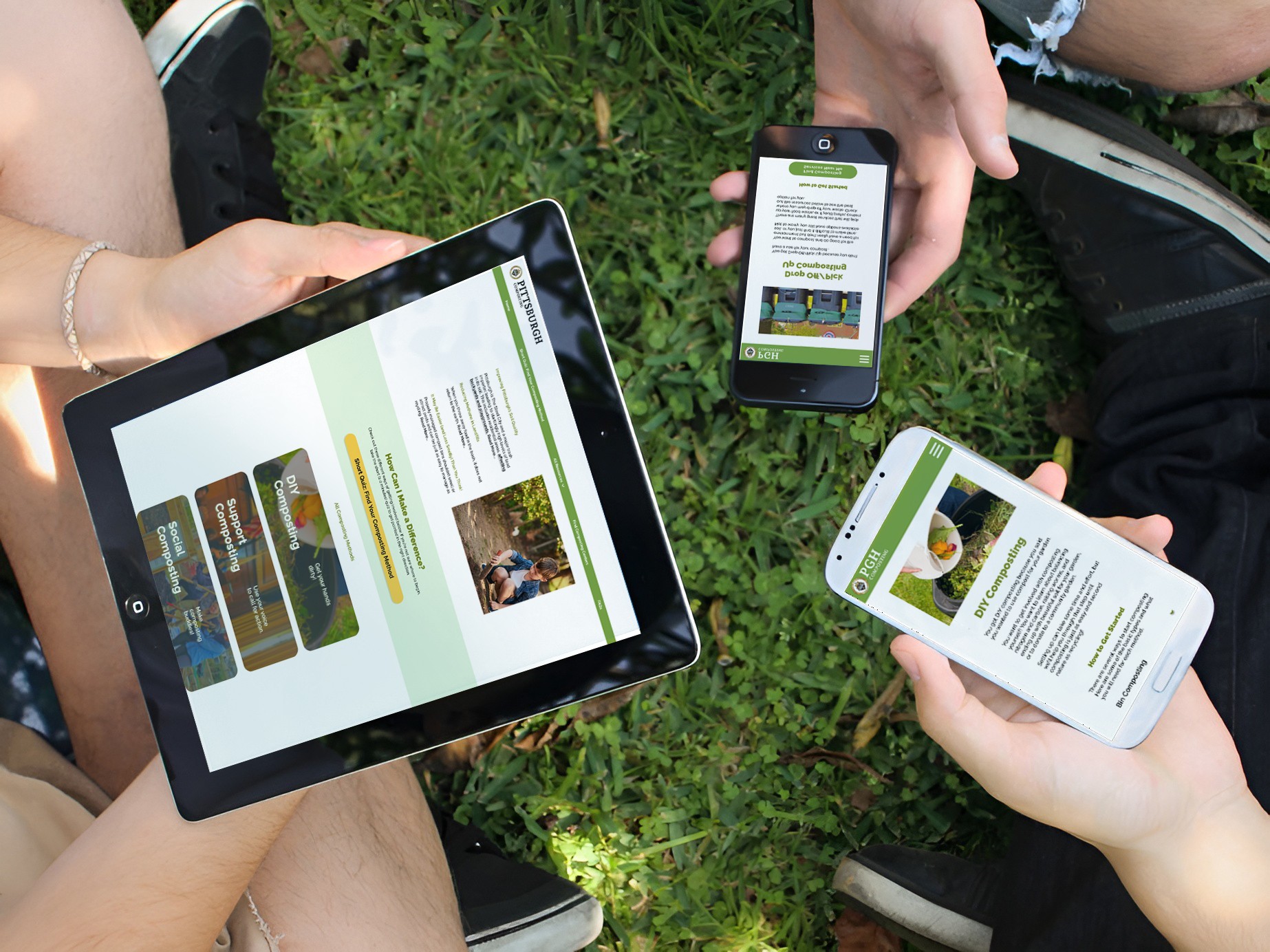
A research-driven project for City of Pittsburgh's Sustainability and Resilience division to increase residential composting through evidence-based resource guidance. This capstone focused on understanding barriers to behavior change and translating research insights into actionable strategy.
Project Type: Client Project | Carnegie Mellon University HCI Capstone
Timeline: Spring 2022
Team: Elan Suder, Jailyn Zabala, Lily Huang, Noni Shelton
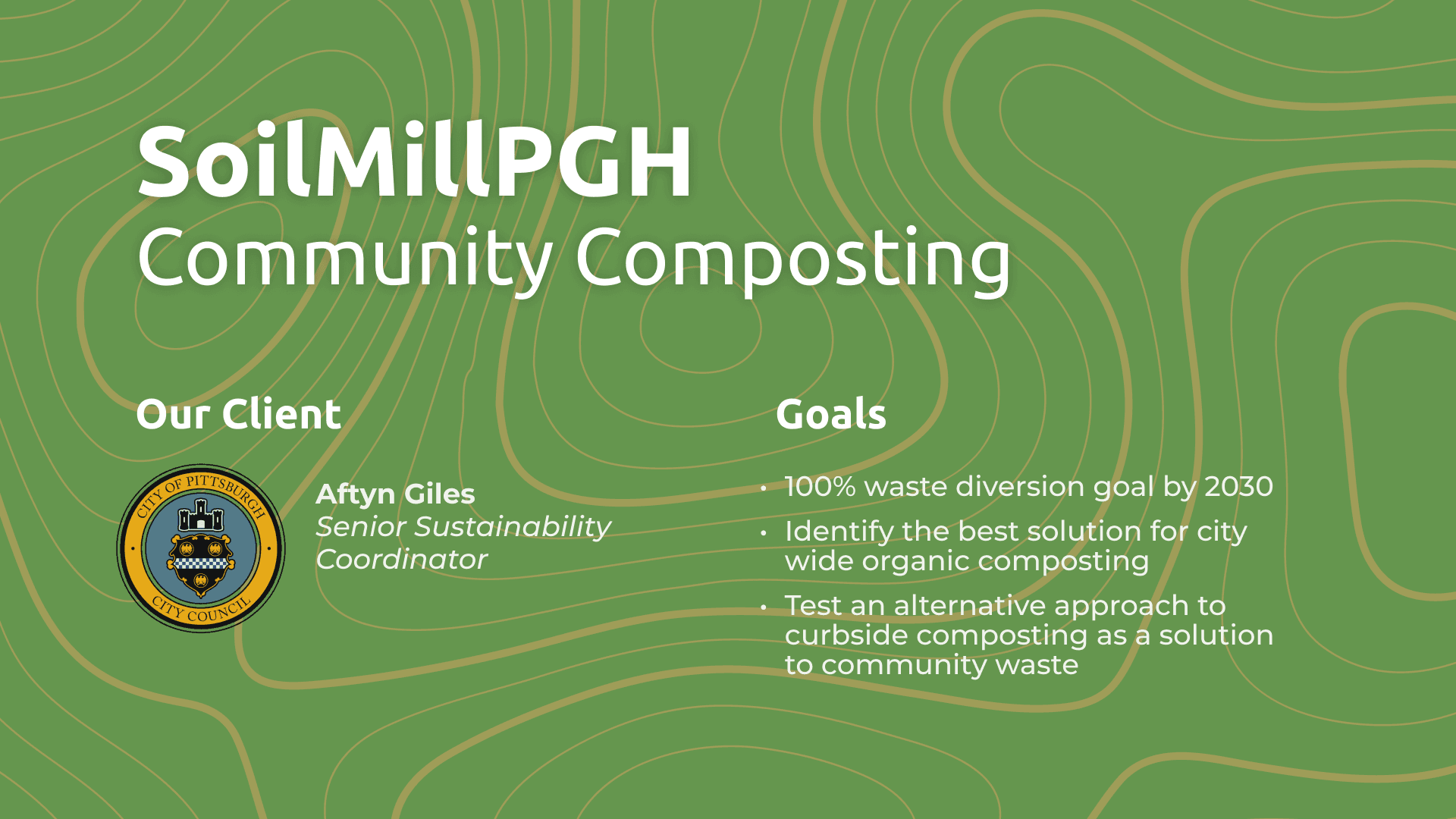
Client: City of Pittsburgh, Sustainability and Resilience Division
Deliverables: Interactive website (Figma prototypes + HTML/CSS implementation), research report, final presentation to City of Pittsburgh
ROLE
WHO IS THIS FOR?
Target Users: Pittsburgh residents interested in composting, but are uncertain of how to start or how to fit it into their life.
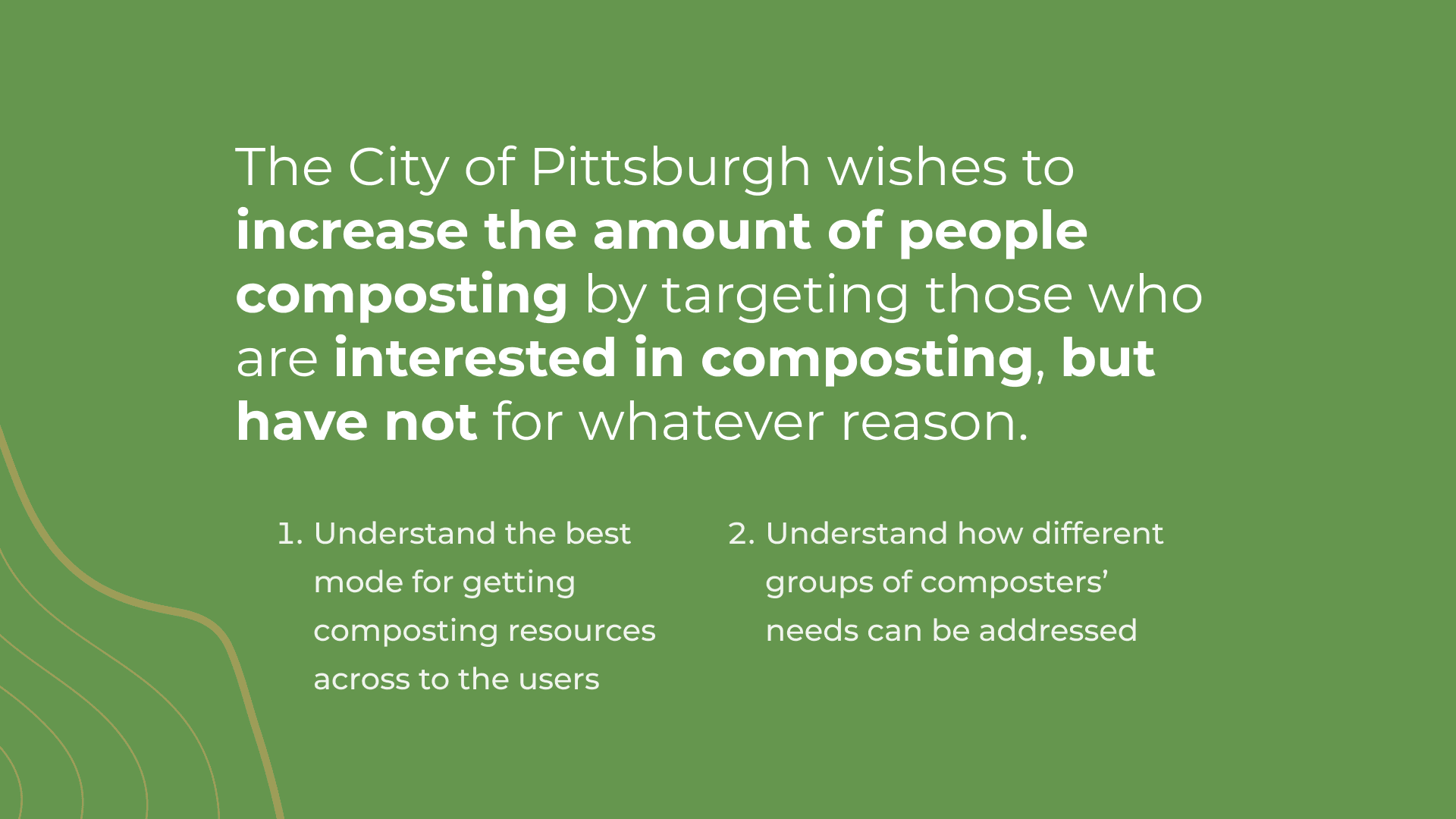
While many Pittsburgh residents expressed interest in composting, existing resources were scattered and didn't account for different living situations, capabilities, or commitment levels. The city needed evidence-based insights into what actually drives composting behavior and how to remove barriers to participation.
RESEARCH
We conducted expert interviews with several composting organizations, private pickup services, and city policymakers to understand Pittsburgh's composting landscape. Policymakers explained infrastructural barriers (why curbside pickup programs weren't feasible) and the political support needed for systemic change, while private service owners shared strategies for keeping participants motivated.
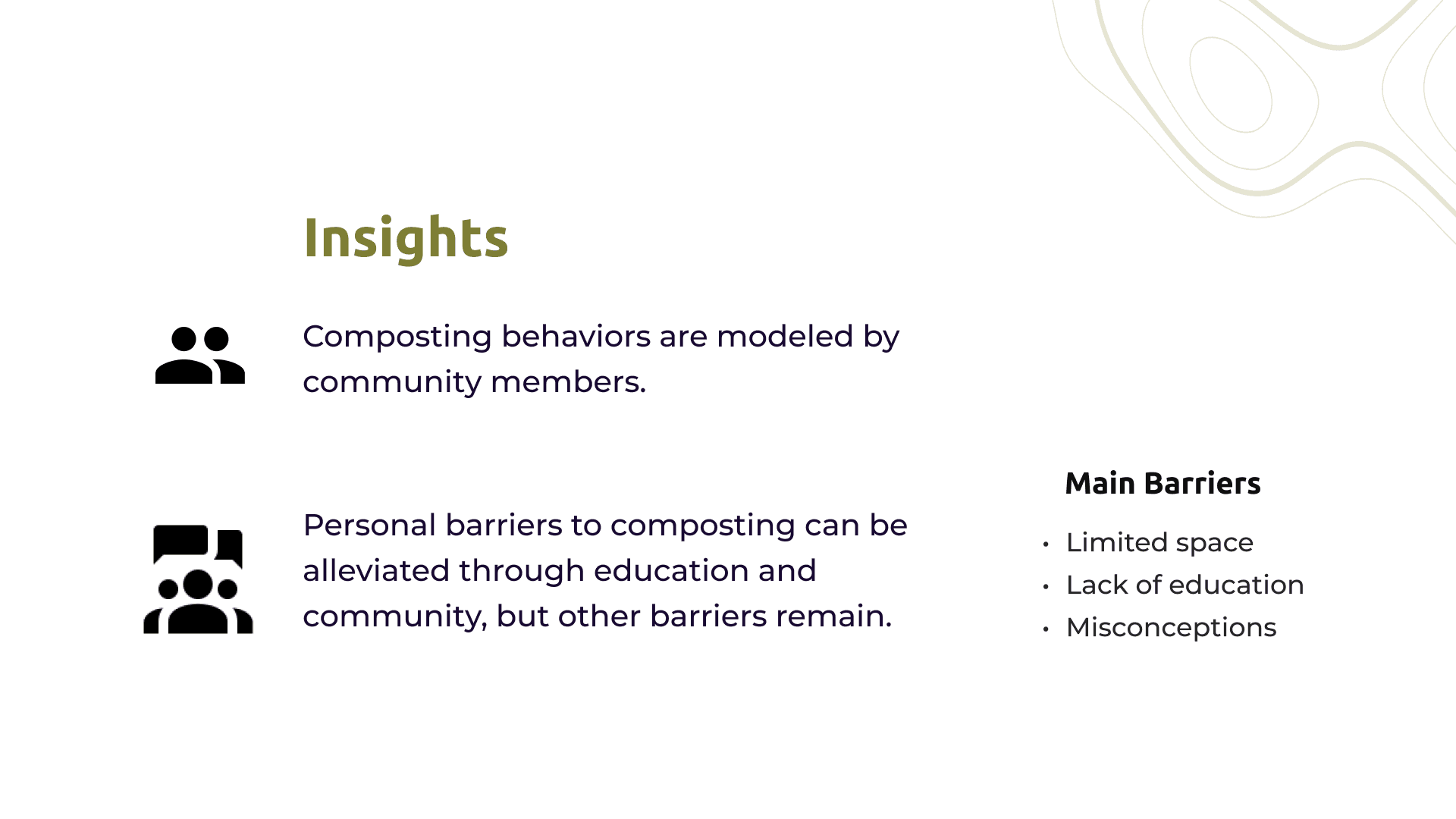
Through interviews with resident composters, we identified four key drivers: community connection, habit formation, education, and personal satisfaction.
Interviews with non-composters revealed different constraints (time, space, physical ability), and a critical insight: even with existing resources, people weren't composting because they didn't know where to begin. The information was overwhelming and not tailored to individual circumstances.
Four key design questions surfaced:
How might we involve community in individual composting?
How might we ingrain composting as a habit?
How might we provide accessible educational resources that address personal barriers?
How might we make composting satisfying for different types of composters?
SOLUTION
We iterated an interactive sorting system that matches residents based on their constraints and preferences to pages with different categories of composting resources: DIY methods, drop-off services, social groups, and official policy. The information architecture prioritized accessibility (5th-grade reading level) and comprehensive resource pages with everything needed to take action.
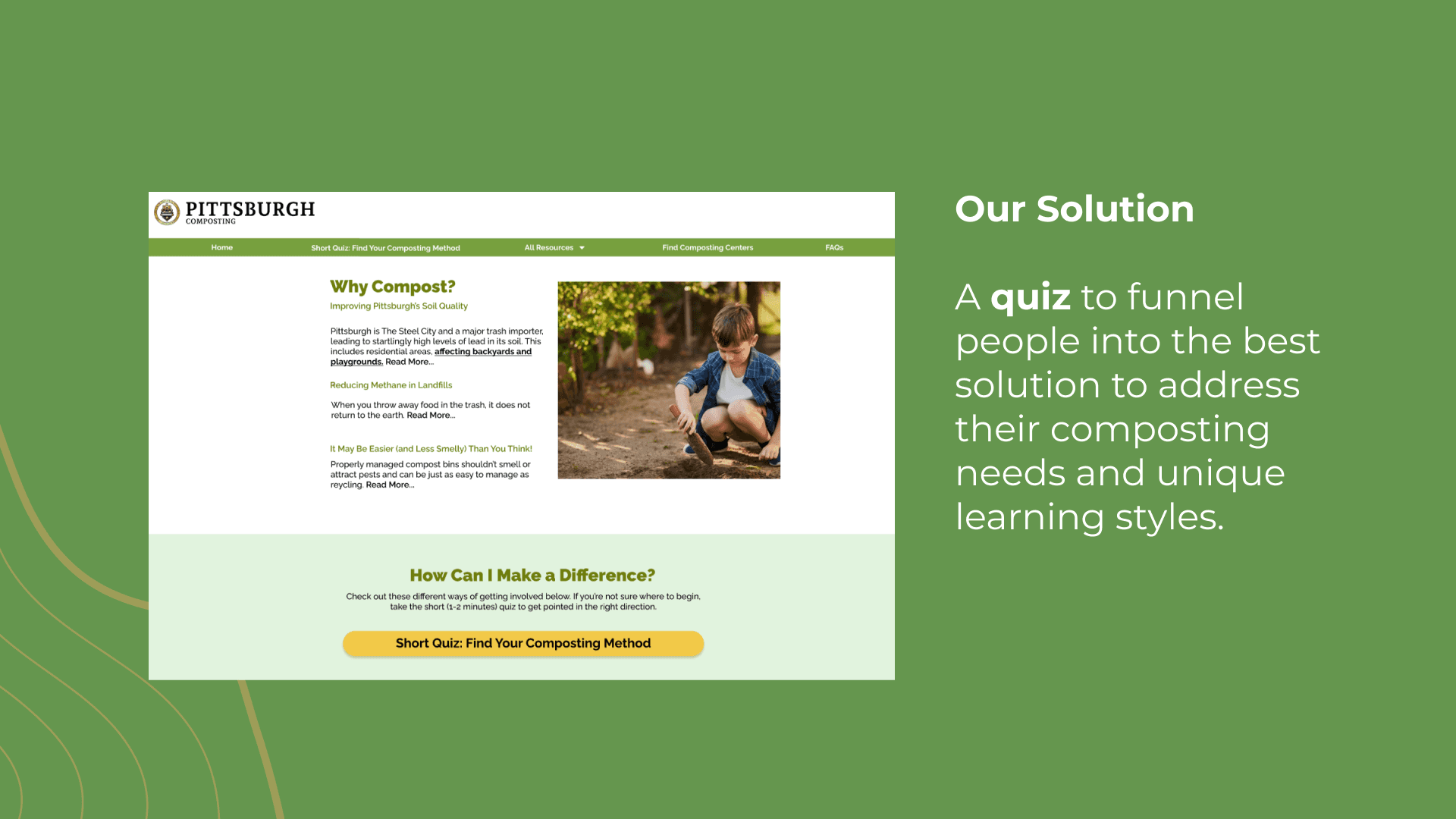
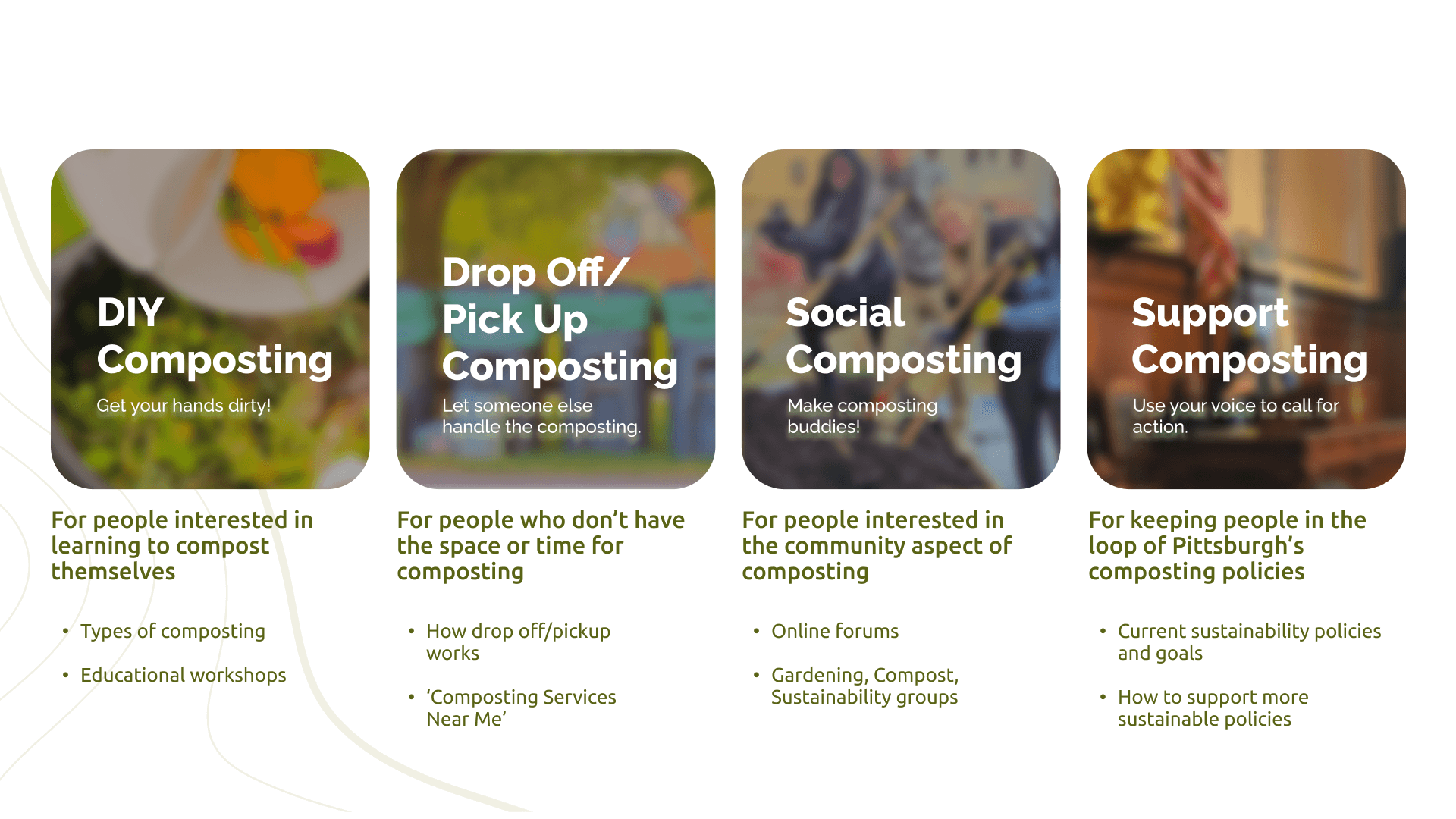
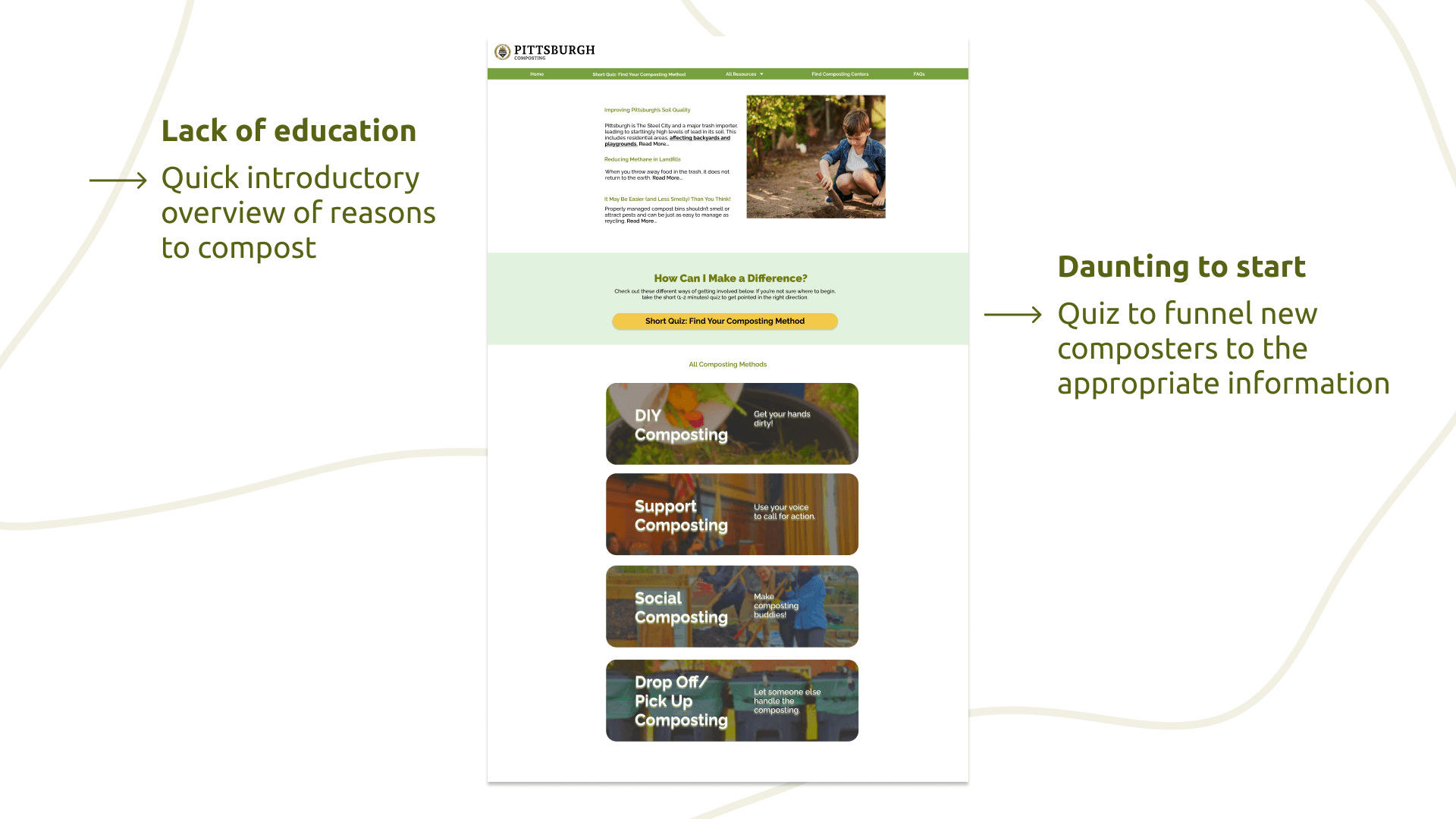
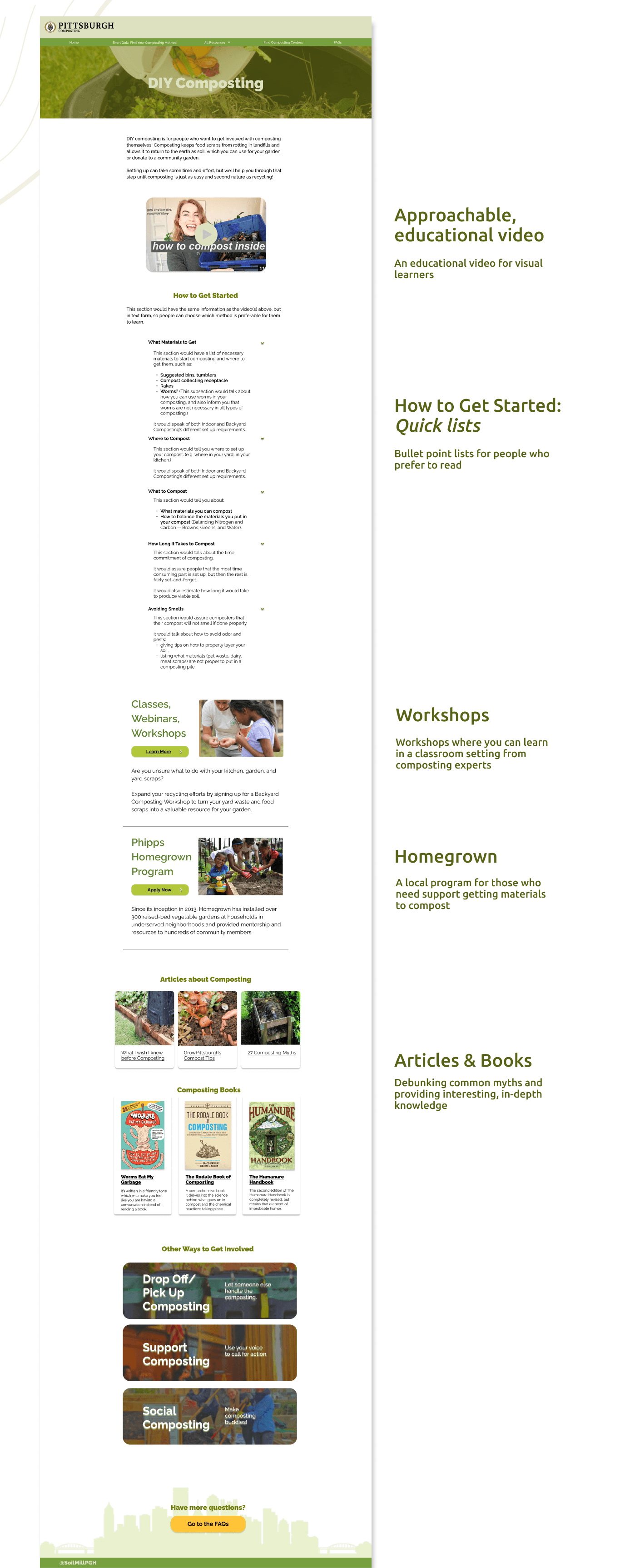
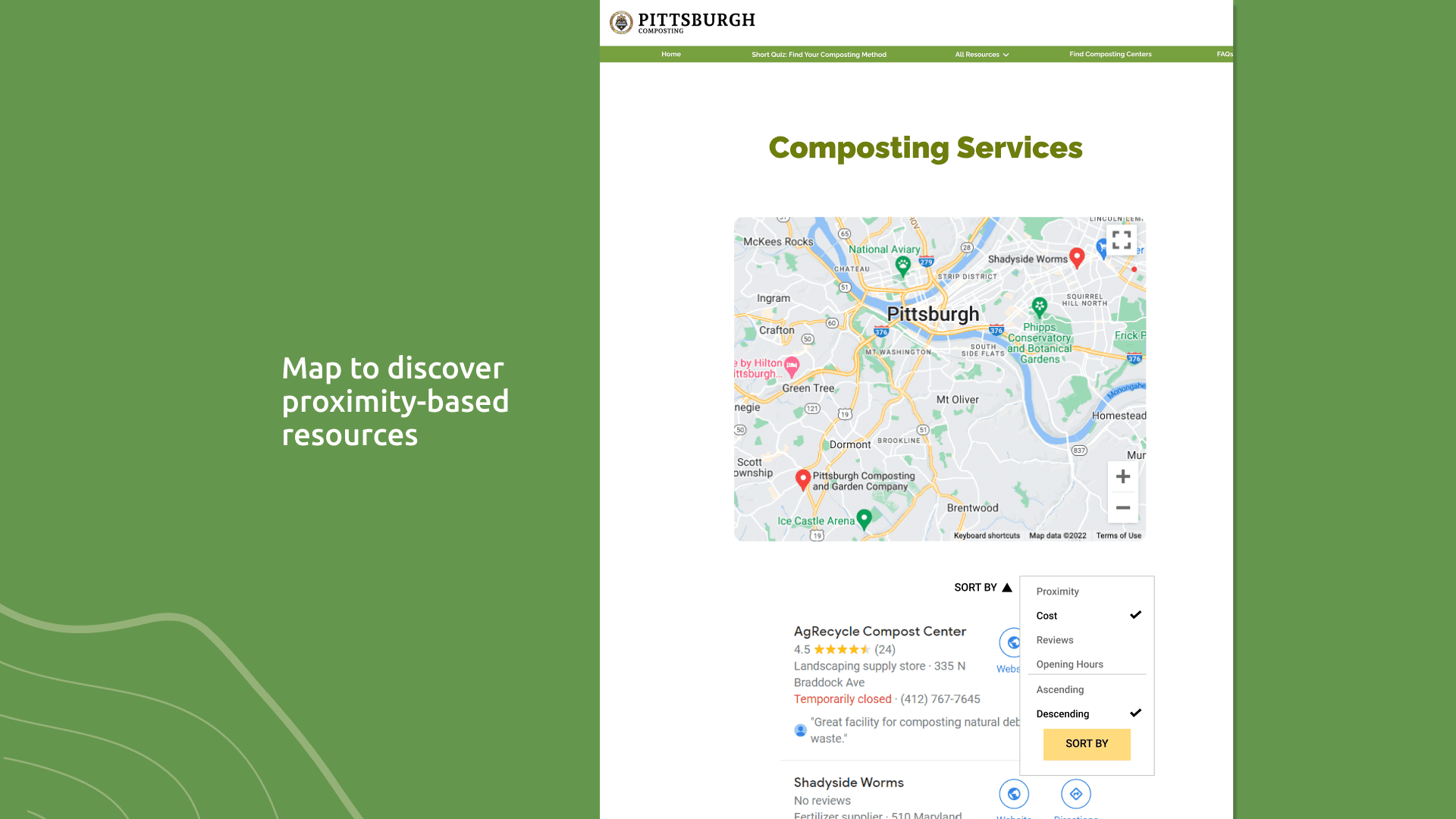
Throughout 20+ user tests across lo-fi and hi-fi prototypes, participants validated our personalized approach while requesting additional features like proximity-based resources and clarity around Pittsburgh's composting politics—feedback we brought to our client, prompting plans for expanded educational content on the city website. Each iteration incorporated user feedback to refine content organization and reduce friction between interest and behavior.
WHAT NEXT?
Our client is using our final design to build the full website for SoilMillPGH: a pilot program testing composting behavior change among residents. Our research established a framework for understanding barriers to action and demonstrated how tailored resource delivery could convert interest into participation. The city may use these insights to evaluate the pilot's effectiveness and refine community engagement strategies.
User feedback also influenced broader plans: the city is now developing content explaining composting policy and infrastructure challenges, responding to residents' expressed need for transparency around systemic barriers.